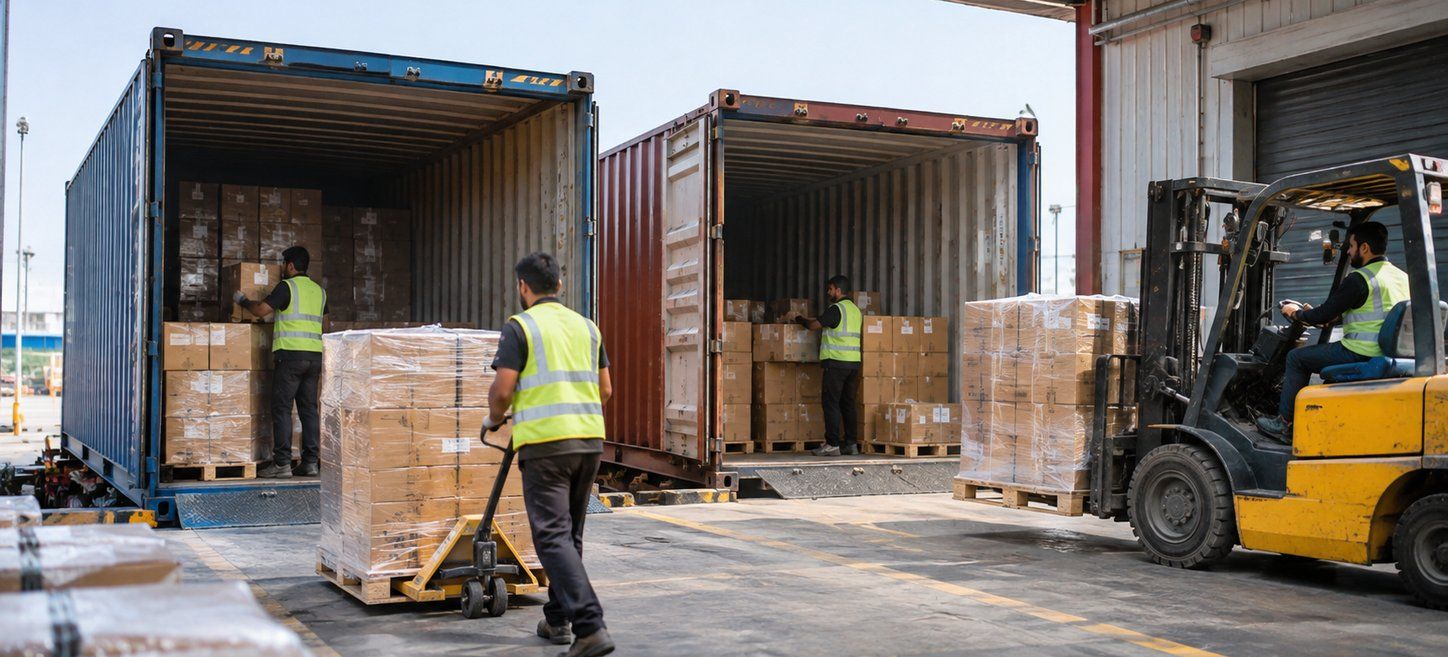
Short answer: cross-stuffing is moving cargo from one container to another, usually at a warehouse or container freight station, without clearing it into the UAE market. Transhipment is moving a container from one vessel to another at an intermediate port. Dubai is used for both because Jebel Ali is a major hub with free zones and bonded facilities. Neither normally attracts UAE duty, as long as the goods stay under customs control and leave the country.
Cross-stuffing vs transhipment: the difference
| Cross-stuffing | Transhipment | |
|---|---|---|
| What moves | The cargo, from one container to another | The container, from one vessel to another |
| Where it happens | Warehouse, CFS, free zone or bonded area | At the port, between vessels |
| Container changes? | Yes | No, unless combined with cross-stuffing |
| Typical reason | Change container, combine or split loads | No direct service to the destination |
| Who arranges it | Shipper or forwarder | Usually the shipping line, as part of the route |
When cross-stuffing is used
Cross-stuffing (also called restuffing or transloading) solves several common problems.
1. Moving cargo inland or across borders
Some shipping lines do not allow their containers to travel far inland or cross certain borders. Cargo arriving at Jebel Ali for an onward road journey may be cross-stuffed into a trailer or a different container. See Dubai to Saudi Arabia for road routes.
2. Returning the line’s container to stop detention
Every day a shipping line’s container is kept beyond free time adds detention charges. If cargo will be stored for a while before onward shipment, unloading it into a warehouse and returning the empty container stops those charges. See demurrage and detention in the UAE.
3. Splitting a container for different buyers
A trader may bring in one 40′ container and split it into several smaller shipments for buyers in different countries. Each part is restuffed into LCL or a smaller container for its destination.
4. Combining cargo into one container
The opposite also happens: goods from several containers or suppliers are combined into one container for a single buyer. This is common for re-exports. See re-export from Dubai.
5. Changing equipment
Cargo may need to move from a damaged container, or from a standard container to a high cube, open top or flat rack for the next leg.
How transhipment works at Jebel Ali
Many destinations have no direct service from the loading port. In that case, the container sails to a hub port, is unloaded, and waits for a connecting vessel to its final port. Jebel Ali is one of the main transhipment hubs in the region, connecting mainline services from Asia and Europe with feeder services to smaller ports in the Gulf, the Red Sea, East Africa and the Indian subcontinent.
For the shipper, transhipment usually means:
- A longer transit time, because the container waits for the connecting vessel.
- More handling, with an extra unload and load.
- The same bill of lading if the carrier arranges it as part of a through route.
Ask your forwarder whether a service is direct or transhipped when you compare quotes. A cheaper transhipped service can cost more in time.
How customs treats cross-stuffed and transhipped cargo
Goods that are cross-stuffed or transhipped in Dubai and then leave the UAE do not normally pay UAE duty. They must stay under customs control in one of these situations:
- Port transhipment, where the container stays in the terminal between vessels.
- Free zone, where goods are outside the UAE customs territory for duty purposes.
- Bonded warehouse or CFS, where goods are held under customs supervision.
- Transit, where goods move through the UAE under a transit declaration.
Each movement needs the right declaration. If cross-stuffed goods are instead released into the UAE market, duty and VAT become payable. See customs clearance charges in Dubai.
What drives the cost of cross-stuffing
Cross-stuffing is priced per job, and costs vary widely. The main factors are:
| Cost factor | Why it matters |
|---|---|
| Number of containers | Each container in and out needs handling and haulage |
| Cargo type and packing | Palletised goods move quickly with a forklift; loose cartons and bags need more labour |
| Equipment | Heavy or long cargo may need special forklifts or cranes |
| Haulage | Moving containers between the terminal and the warehouse and back |
| Customs declarations | Each movement under customs control needs paperwork |
| New container or trailer | The onward equipment has its own costs |
| Storage time | Daily storage if the cargo waits before the next leg |
| Securing materials | Lashing, airbags and pallets for the new load |
A job with two containers of palletised cargo moving straight from one box to another is quick. A job that unpacks loose cartons from four containers, sorts them by buyer and repacks them for three destinations takes far longer and costs more.
A step-by-step cross-stuffing job (illustrative)
This example is illustrative only. A trader receives two 40′ containers of mixed household goods at Jebel Ali, destined for buyers in Oman and Kenya.
- Arrival: the containers are discharged and moved under customs control to a CFS.
- Declaration: the forwarder files the declaration for the cargo to stay under customs control.
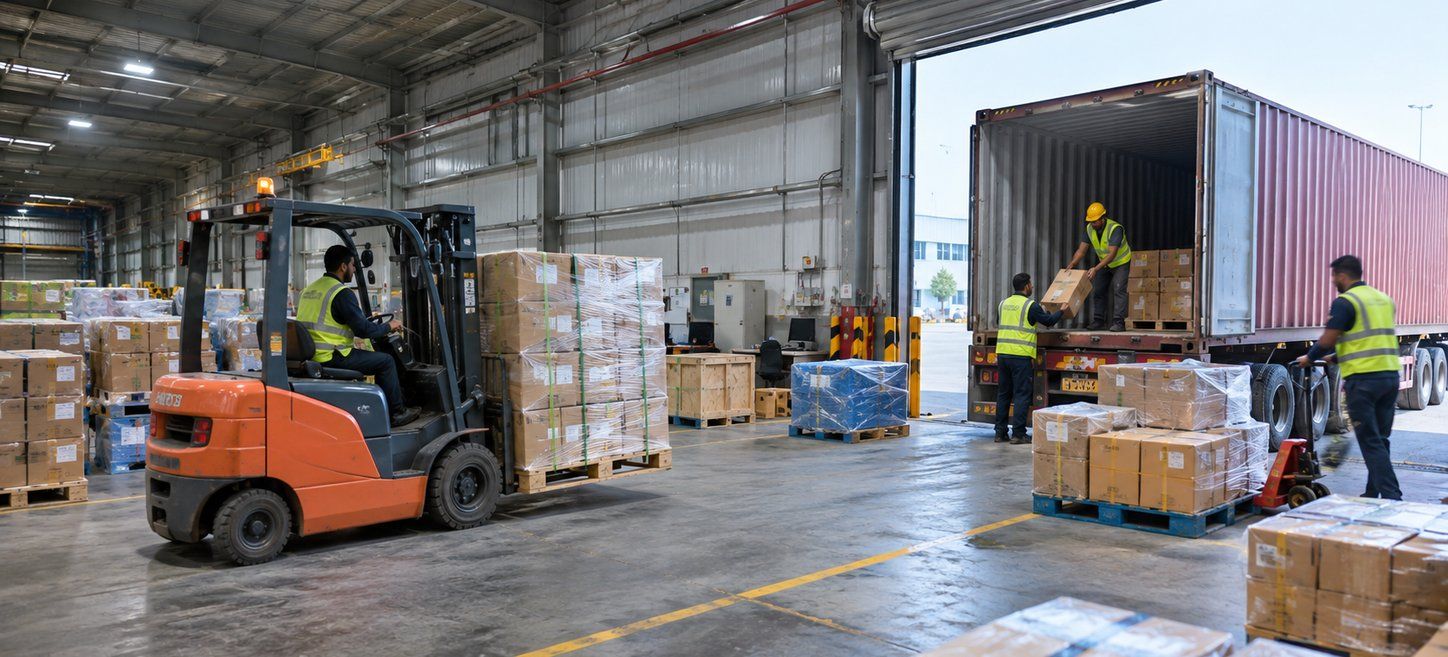
- Destuffing: cartons are unloaded, counted and checked against the packing list.
- Sorting: goods are split by buyer, and any damage is photographed.
- Restuffing: the Oman order is loaded into a trailer for the road journey; the Kenya order goes into a 20′ container for the sea leg.
- Return: both empty 40′ containers go back to the shipping line, stopping detention.
- Onward documents: exit declarations, a new bill of lading and updated packing lists are issued.
How to avoid damage and delays
- Send the packing list early, so the warehouse can plan labour and space.
- Label cartons clearly, especially when splitting cargo for different buyers.
- Ask for photos of the cargo on arrival and before the new container is closed.
- Secure the new load properly. See cargo lashing and securing.
- Book the onward leg in advance, so the cargo does not wait in storage.
- Keep documents linked to the original arrival, so customs can trace the goods.
Cross-stuffing and LCL consolidation
LCL consolidation is closely related to cross-stuffing. Cargo from several shippers is delivered to a container freight station, loaded together into one container and shipped as a single box. At destination, the container is unpacked and each shipper’s goods are released separately. Dubai’s CFS facilities also unpack LCL containers arriving from Asia and restuff part of the cargo for onward destinations. See LCL shipping from Dubai.
Questions to ask before booking a cross-stuffing job
- Where will the work be done: in the port, a free zone or a bonded warehouse?
- Which customs declarations are needed, and who files them?
- How long will the cargo wait before the next leg?
- Will the cargo be counted, photographed and checked for damage?
- Who supplies the onward container or trailer, and when?
- What is included in the price, and what is charged extra?
Key takeaways
- Cross-stuffing moves cargo between containers; transhipment moves a container between vessels.
- Jebel Ali is a major regional transhipment hub linking mainline and feeder services.
- Cross-stuffing is used to change equipment, split or combine loads, or return a line’s container.
- Goods kept under customs control and re-exported do not normally pay UAE duty.
- Cost depends on containers, cargo type, labour, haulage, declarations and storage time.
- Clear carton marks and an early packing list make cross-stuffing faster and safer.
Is cross-stuffing worth it?
Cross-stuffing makes sense when it saves detention, opens an onward route or lets you sell one shipment to several buyers. It adds handling, so it is not worth it when the cargo could travel directly in its original container.
Our team can arrange cross-stuffing, storage and onward shipment from Dubai by sea or road. See our warehousing and distribution service or request a quote with your container details and destinations.