Sea Freight (FCL & LCL)
Full container (FCL) and shared container (LCL) shipping from Jebel Ali, with booking, documents and tracking handled by one team.

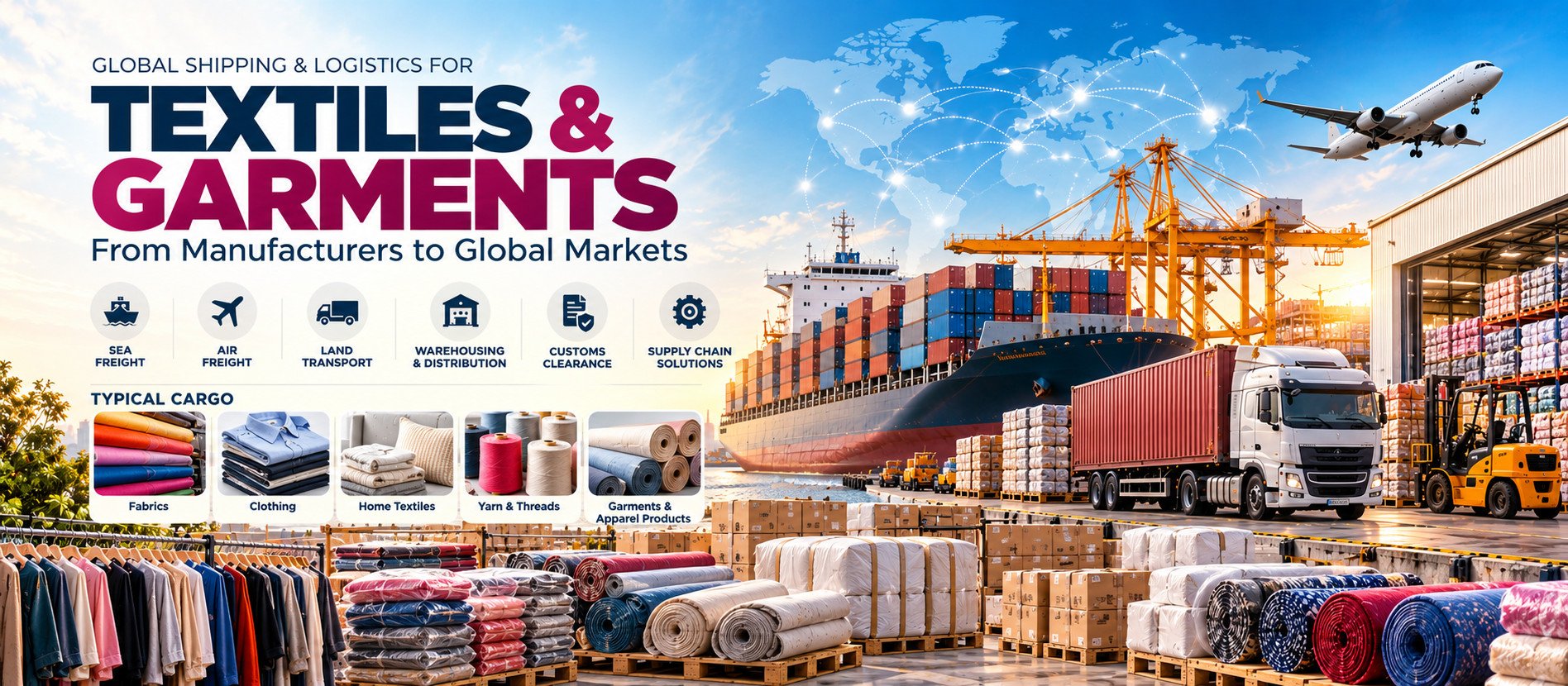
For textile & garment traders importing and exporting fabrics, clothing and home textiles.
Textile traders in Dubai buy fabric rolls, finished garments and home textiles from mills and factories across Asia, then sell into the Gulf, Africa and beyond. Volumes swing with the seasons, and goods often arrive from several suppliers at once.
We combine supplier shipments, keep goods clean and dry in transit, and prepare origin documents that can affect the duty your buyer pays.
How we handle it
Goods from multiple suppliers received and combined into one FCL or LCL shipment.
Container condition checked and moisture protection advised for long transits.
Certificates of origin prepared, including preferential certificates under trade agreements such as UAE–India CEPA where the goods qualify.
Space booked ahead of peak periods so stock lands in time for the selling season.
EQUIPMENT
DOCUMENTS
Requirements vary by product and destination. We confirm the exact list when we quote.
Textile classification depends on what the fabric is made of and how the product is made. Two shirts that look the same can fall under different HS codes, with different duty rates, if one is cotton and the other polyester, or if one is knitted and the other woven. Customs authorities ask for these details, so they should be on the invoice from the start.
Moisture is the main enemy. Condensation inside a container, often called "container rain", happens when warm, humid cargo cools on the voyage. It can stain fabric, cause mildew and spoil a whole season's stock.
Textile demand peaks before festivals, school terms and seasons, and so does demand for container space. Ramadan and Eid stock, winter ranges and back-to-school goods all compete for the same sailings. Booking two to three weeks earlier than usual in peak months, and confirming factory ready dates honestly, avoids stock missing its selling window.
Where goods qualify under a trade agreement, such as the UAE–India CEPA, a preferential certificate of origin can reduce duty. It usually has to be issued before or at shipment, so plan it with the supplier. See shipping from India to Dubai.
This example is illustrative only. A Dubai trader buys ready-made garments from four suppliers in the city for a wholesaler in Mombasa. Each supplier delivers cartons to one warehouse, where they are counted and checked. The trader issues one invoice to the buyer showing fibre composition, garment type and pieces per line, with one combined packing list. The 22 CBM order is loaded into a 40′ high cube with desiccants, and the B/L is issued to the Mombasa buyer. Because the destination requires conformity paperwork for some textiles, the buyer confirms the requirement before the container is loaded.
Services used
Full container (FCL) and shared container (LCL) shipping from Jebel Ali, with booking, documents and tracking handled by one team.
As a Non-Vessel Operating Common Carrier we issue our own house bill of lading and buy container space in bulk from ocean carriers.
Storage, consolidation and pick-and-pack in Dubai, connected directly to our sea, air and road services.
Most garments travel folded in cartons inside 40′ or 40′ high cube containers. Garment-on-hanger equipment can be arranged for some routes when garments must arrive ready to display.
It can. Where a trade agreement applies and the goods meet its rules of origin, a preferential certificate of origin may reduce the duty at destination. We help prepare the right certificate.
HS codes and duty rates for textiles depend on the fibre (for example cotton, polyester or wool) and on whether the item is knitted or woven. Without these details, customs may query or reclassify the goods.
Yes, on some routes. Garment-on-hanger containers are fitted with rails so garments arrive ready to display. They cost more and are not available everywhere, so ask before you plan around them.
Use lined cartons or wrapped rolls, load only dry cargo into a clean, dry container, and add desiccants on long or humid routes. Container condition is worth checking before loading.
It can be exported from the UAE, but many importing countries restrict or ban second-hand clothing, or require fumigation and health certificates. Check the destination rules before buying stock.
Many Indian-origin goods qualify for reduced or zero UAE duty under the UAE–India CEPA, provided they meet the rules of origin and come with a valid CEPA certificate of origin.
Yes. Rolled and wrapped carpets travel well LCL. Large or heavy rugs may be charged on weight, so compare LCL and FCL for bigger orders.







Share origin, destination and cargo details. Our Dubai team answers on WhatsApp, phone and email.