Sea Freight (FCL & LCL)
Full container (FCL) and shared container (LCL) shipping from Jebel Ali, with booking, documents and tracking handled by one team.

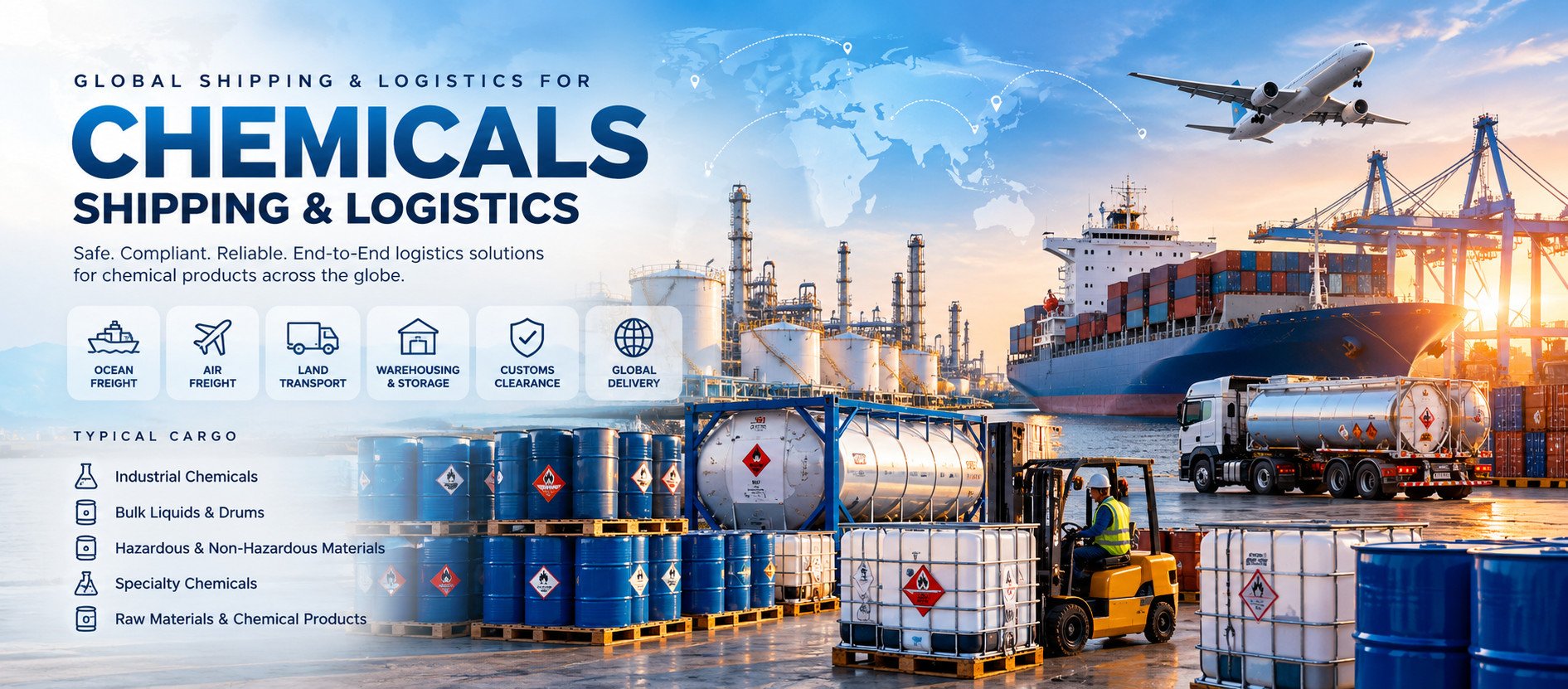
For chemical traders importing and exporting industrial chemicals and related products.
Chemicals range from harmless to highly regulated. Whether a product is classed as dangerous goods decides which carriers will take it, how it must be packed and labelled, and what it costs to ship.
We start with the safety data sheet. From there we confirm classification, packaging and carrier acceptance before booking, so your cargo is not rejected at the terminal.
How we handle it
We read the safety data sheet to confirm UN number, class and packing group before quoting.
DG bookings checked with carriers for acceptance on the route and vessel.
Dangerous goods declarations prepared and packaging and labelling requirements shared with your supplier.
Where a chemical is controlled, we coordinate the permit needed before shipment or release.
EQUIPMENT
DOCUMENTS
Requirements vary by product and destination. We confirm the exact list when we quote.
The safety data sheet (SDS) decides how a chemical can be shipped. For transport, the most important part is section 14 (transport information).
| SDS item | What it tells the carrier |
|---|---|
| UN number | Identifies the substance or group for dangerous goods rules |
| Proper shipping name | The official name used on the DG declaration |
| Transport hazard class | For example class 3 (flammable liquids) or class 8 (corrosives) |
| Packing group | I, II or III: high, medium or low danger |
| Marine pollutant | Whether extra marking and rules apply at sea |
If section 14 says "not regulated", carriers usually still ask for the SDS and a non-DG declaration before accepting the booking. An SDS that is old, incomplete or not in English can delay acceptance, so ask the manufacturer for a current version.
Some chemicals are controlled for reasons other than transport safety, such as pesticides, precursor chemicals and substances under international conventions. These can need import permits at destination, and sometimes export approval in the UAE. In the UAE, pesticides must be registered with the Ministry of Climate Change and Environment before import. See MOCCAE import permits. Check the permit status before the booking, because a permit can't usually be obtained while the cargo waits at the port.
This example is illustrative only. A Dubai chemical trader exports 80 drums of a flammable solvent. Section 14 of the SDS shows a UN number, class 3 and packing group II, so the product is dangerous goods. The drums are UN-approved and labelled with the class and UN number. Before the booking is confirmed, the carrier's acceptance of class 3 on the route is checked, and the dangerous goods declaration is prepared. The container is placarded, and the drums are palletised and secured so they can't move. The buyer confirms that no import permit is needed in its country before the cargo sails.
Services used
Full container (FCL) and shared container (LCL) shipping from Jebel Ali, with booking, documents and tracking handled by one team.
Import, export and transit declarations in Dubai, with document checks that keep your cargo from being held.
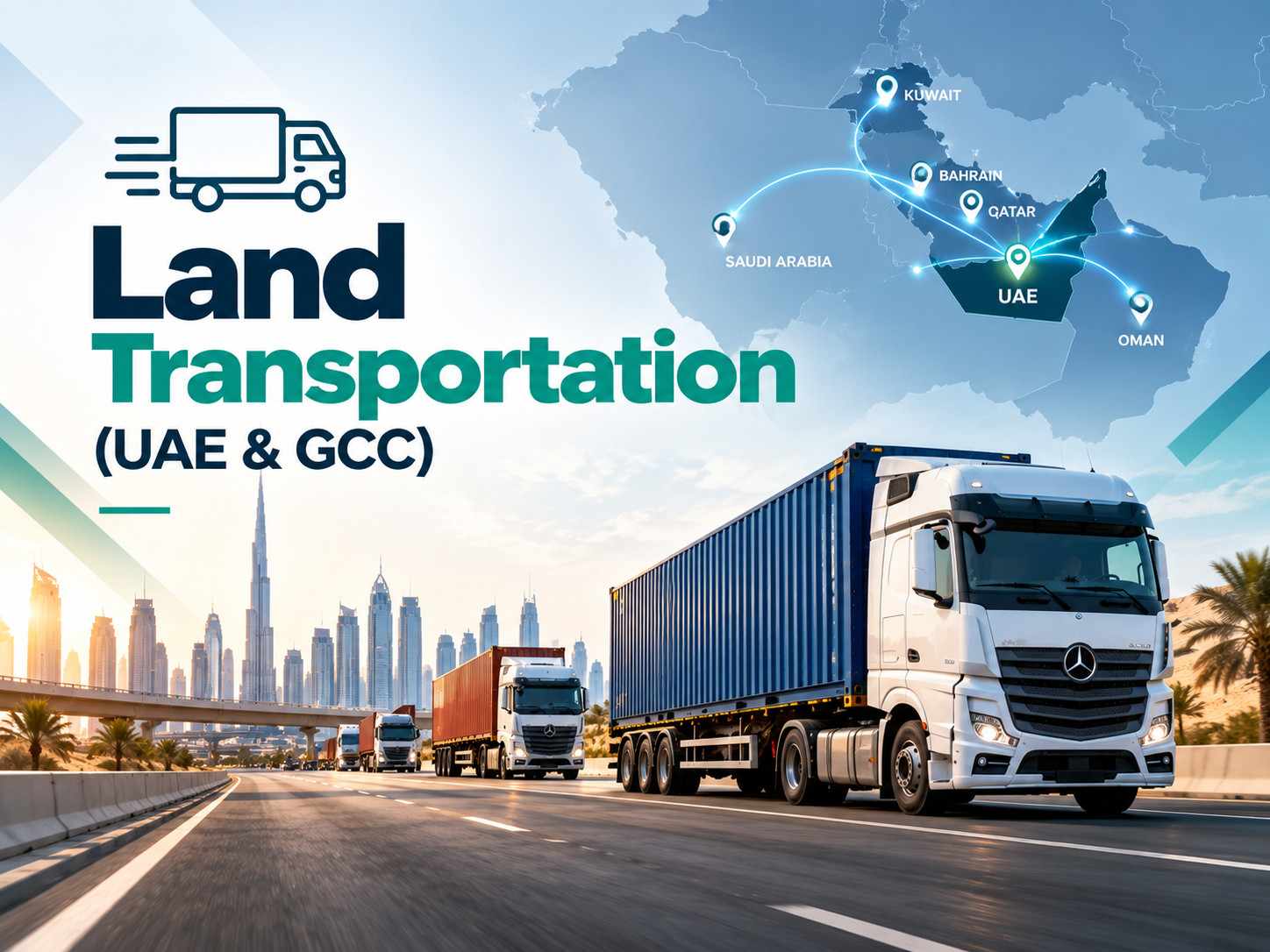
Container haulage within the UAE and cross-border trucking to Saudi Arabia, Oman, Qatar, Bahrain and Kuwait.
Check section 14 (transport information) of the safety data sheet. If it lists a UN number, class and packing group, the product is regulated as dangerous goods for transport. Send us the SDS and we will confirm.
Some DG cargo can move as LCL, but options are limited because many consolidators and carriers restrict DG in shared containers. FCL is often more practical.
Carriers often ask for a non-DG declaration and the SDS to confirm the product is not regulated. Having these ready avoids delays at booking.
No. Each carrier decides which DG classes and UN numbers it accepts, and on which routes and vessels. Some classes are restricted or refused entirely, which is why DG bookings are checked with the carrier before confirmation.
It is a statement, usually from the shipper, that the product is not regulated as dangerous goods for transport, supported by the SDS. Carriers often ask for it when a chemical-sounding product is booked as general cargo.
Usually yes. Carriers add DG surcharges, packaging and labelling cost more, and fewer sailings may accept the cargo. Correct classification avoids paying DG rates for products that are not regulated.
Earlier than general cargo. Carrier acceptance for DG can take a few days, and space for some classes is limited, so share the SDS and booking details as soon as the cargo date is known.
Yes, in warehouses licensed for the specific hazard classes. Share the safety data sheets before the goods arrive so suitable storage can be confirmed.




Share origin, destination and cargo details. Our Dubai team answers on WhatsApp, phone and email.