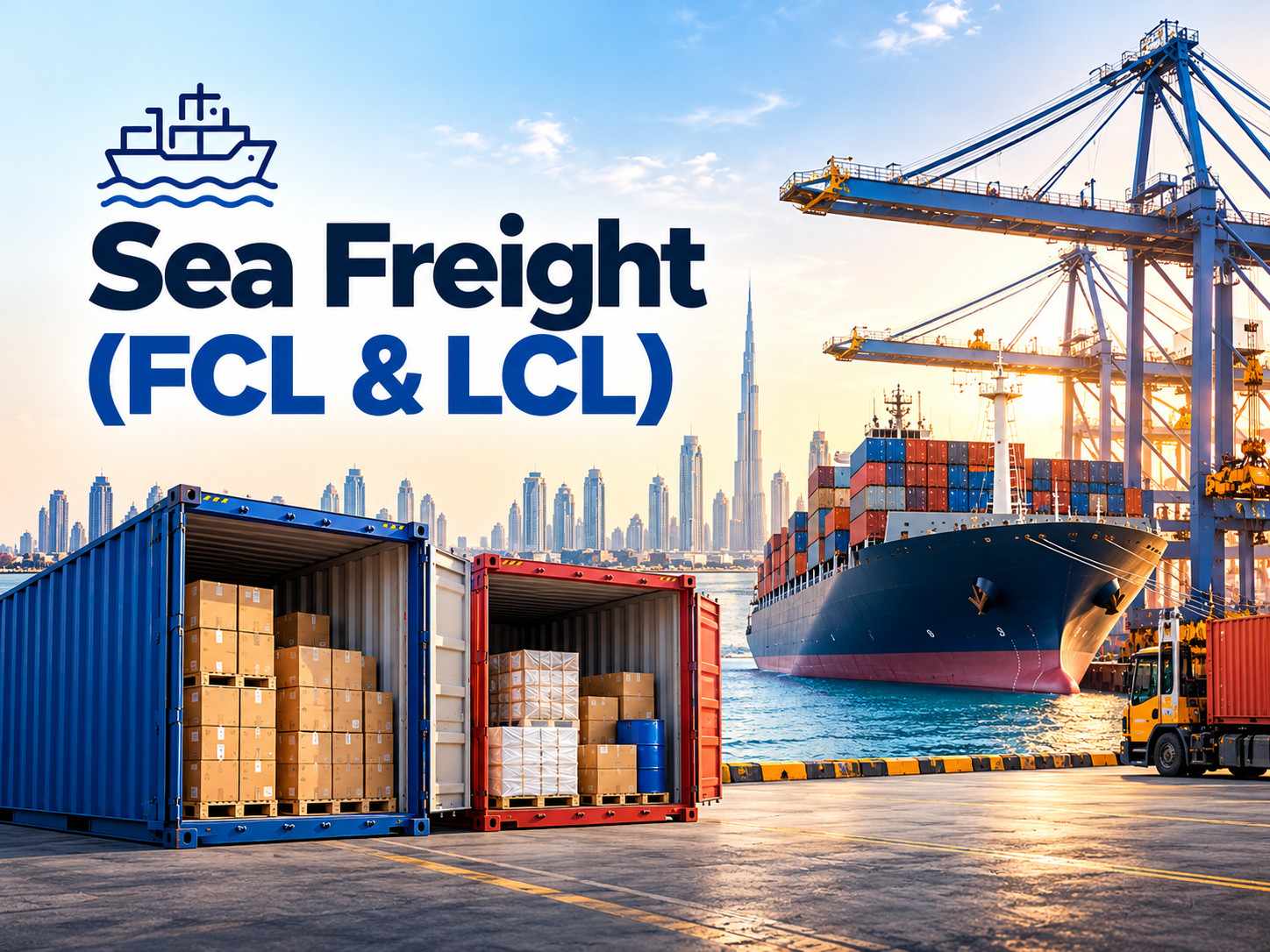
Sea Freight (FCL & LCL)
Full container (FCL) and shared container (LCL) shipping from Jebel Ali, with booking, documents and tracking handled by one team.

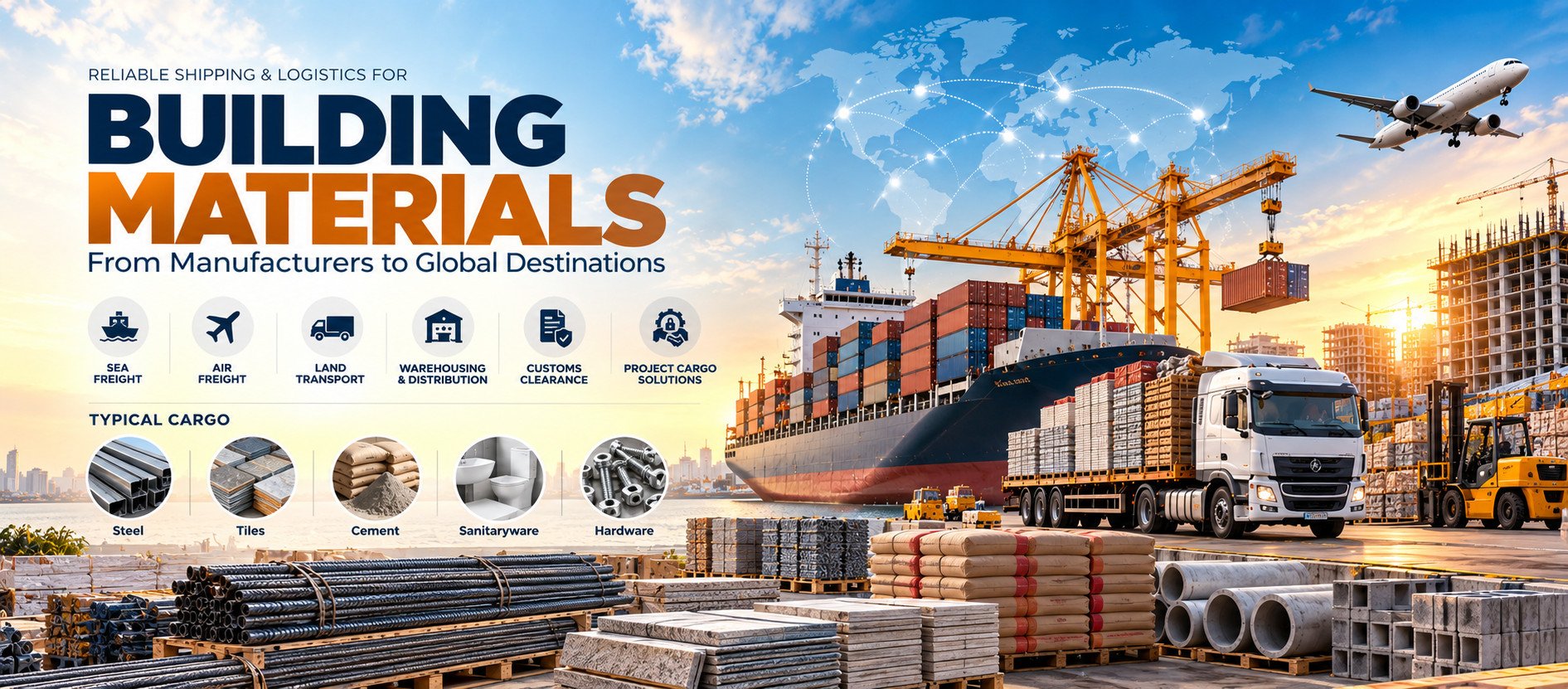
For building material traders importing and exporting steel, tiles, cement, sanitaryware and hardware.
Building materials are heavy, dense and often fragile. A container of tiles or cement reaches its weight limit long before it is full, and a badly loaded box of sanitaryware arrives in pieces.
We plan shipments around payload, packing and the delivery site — whether that is a port warehouse in Mombasa or a project in Riyadh reached by road.
How we handle it
We check carrier and road weight limits for each route before choosing 20′ or 40′ equipment.
Flat racks and open tops sourced for long lengths and bundles that will not fit a standard box.
Lashing, dunnage and palletising advice for tiles and sanitaryware to reduce breakage claims.
Trucks booked for site access windows across the UAE and GCC.
EQUIPMENT
DOCUMENTS
Requirements vary by product and destination. We confirm the exact list when we quote.
A 20′ container can hold about 33 cubic metres, but a load of ceramic tiles or cement can reach the weight limit with much of that space empty. Exceeding the limit is not an option: carriers and roads both enforce it, and the verified gross mass (VGM) declared before loading must match the container.
| Cargo | Typical constraint | Common choice |
|---|---|---|
| Tiles, cement, dry mixes | Weight | 20′ dry, loaded to the payload limit |
| Rebar and long steel | Length | Flat rack, open top, or break-bulk for large volumes |
| Sanitaryware | Breakage | 20′ or 40′ dry with crating and blocking |
| Insulation, pipes, lightweight panels | Volume | 40′ high cube |
| Hardware and fittings | Mixed | LCL for small orders, FCL for stock |
Road limits matter too. A container loaded to the carrier's maximum may still be too heavy for the trucks at the destination, especially for deliveries inland. We check both before choosing the equipment.
Site deliveries have their own constraints. Many sites only accept trucks at set times, need advance gate passes, or have no forklift to unload a container. Before the cargo arrives, confirm the delivery window, who unloads, and whether the container should be dropped and collected later. Detention charges keep running until the empty is returned, so a slow site unload has a cost. See demurrage and detention in the UAE.
For projects across the border, building materials often move from Dubai by road. See truck transport from Dubai to Saudi Arabia for transit times and documents.
This example is illustrative only. A Dubai tile trader buys porcelain tiles from Morbi in Gujarat. The tiles ship from Mundra in 20′ containers, each loaded to the payload agreed with the carrier, with pallets strapped and gaps filled so nothing moves. The supplier sends the invoice, a packing list with pallet weights, and a certificate of origin. Where the goods qualify under the UAE–India CEPA, a CEPA certificate of origin can reduce UAE duty. On arrival at Jebel Ali the containers are cleared and trucked to the trader's yard, where a forklift unloads them the same day so the empties go back inside the free time.
Services used
Full container (FCL) and shared container (LCL) shipping from Jebel Ali, with booking, documents and tracking handled by one team.
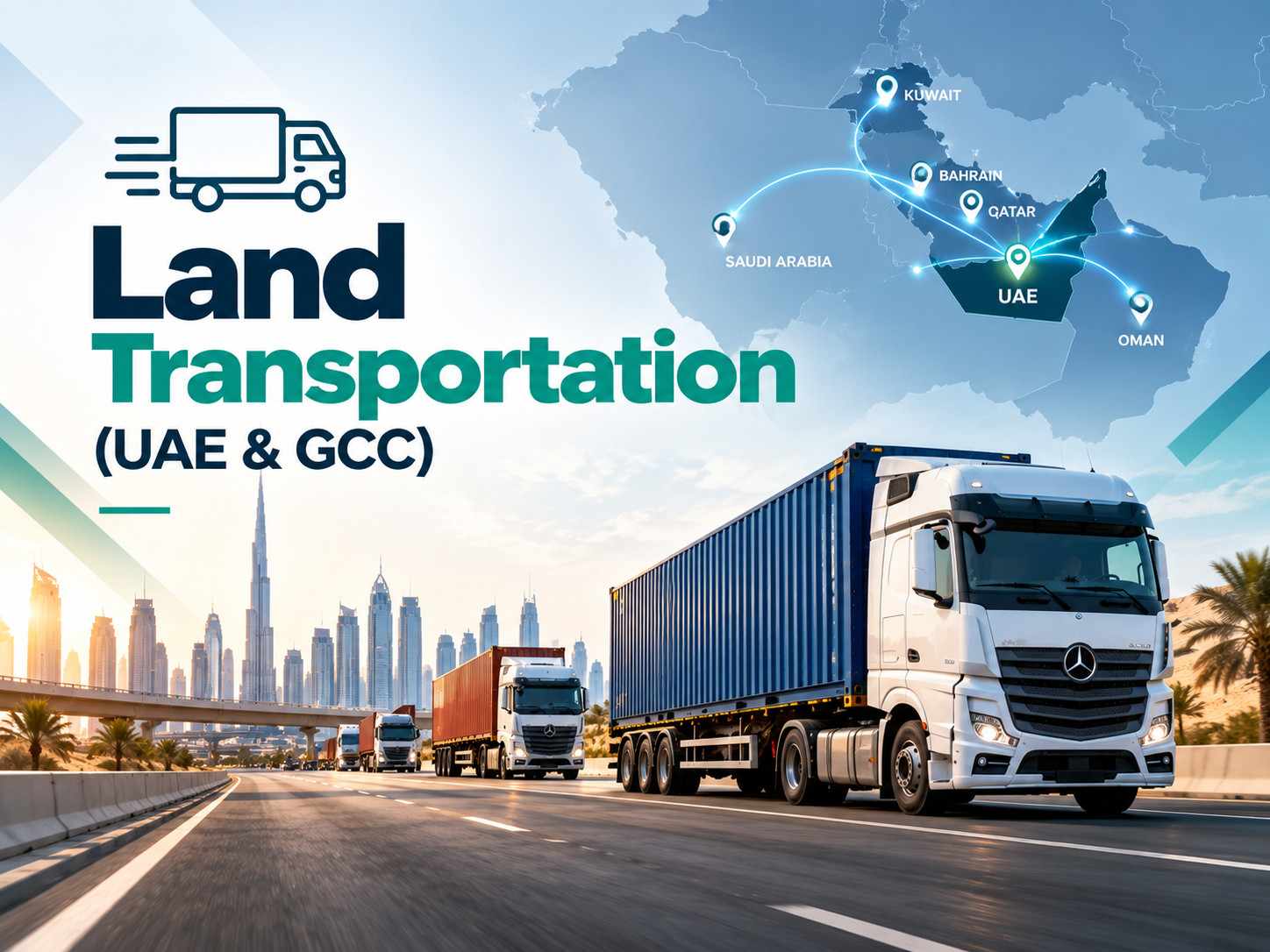
Container haulage within the UAE and cross-border trucking to Saudi Arabia, Oman, Qatar, Bahrain and Kuwait.
Import, export and transit declarations in Dubai, with document checks that keep your cargo from being held.
A 20′ container is often loaded with roughly 21–25 tonnes of cargo, depending on the carrier, the container and road weight limits at origin and destination. We confirm the allowable payload for your route at booking.
Steel that is too long for a standard container moves on flat racks or in open-top containers, or as break-bulk for large volumes. We advise based on length, weight and the destination port.
Some do, depending on the product and the destination. Several GCC and African countries require conformity certificates for products such as steel, cables or electrical fittings. In the UAE, regulated products may need an ECAS certificate. Check before you buy.
Rarely. Tiles reach the weight limit of a 40′ container at about the same tonnage as a 20′, so you pay more for space you cannot use. Heavy cargo is usually cheapest in 20′ containers.
Yes. Containers can be trucked from Jebel Ali to the site, and either unloaded while the truck waits or dropped and collected later. Share the site access rules and unloading arrangements when you book.
Yes. Bagged cement is often shipped in 20′ containers, which reach their weight limit quickly. The bags must be kept dry, so containers should be inspected and protected where needed. Very large volumes usually move as bulk.
Small orders of hardware, fittings or sanitaryware can travel LCL if they are palletised and well packed. Heavy items such as tiles and cement are charged by weight in LCL, so larger orders are usually cheaper as FCL.




Share origin, destination and cargo details. Our Dubai team answers on WhatsApp, phone and email.