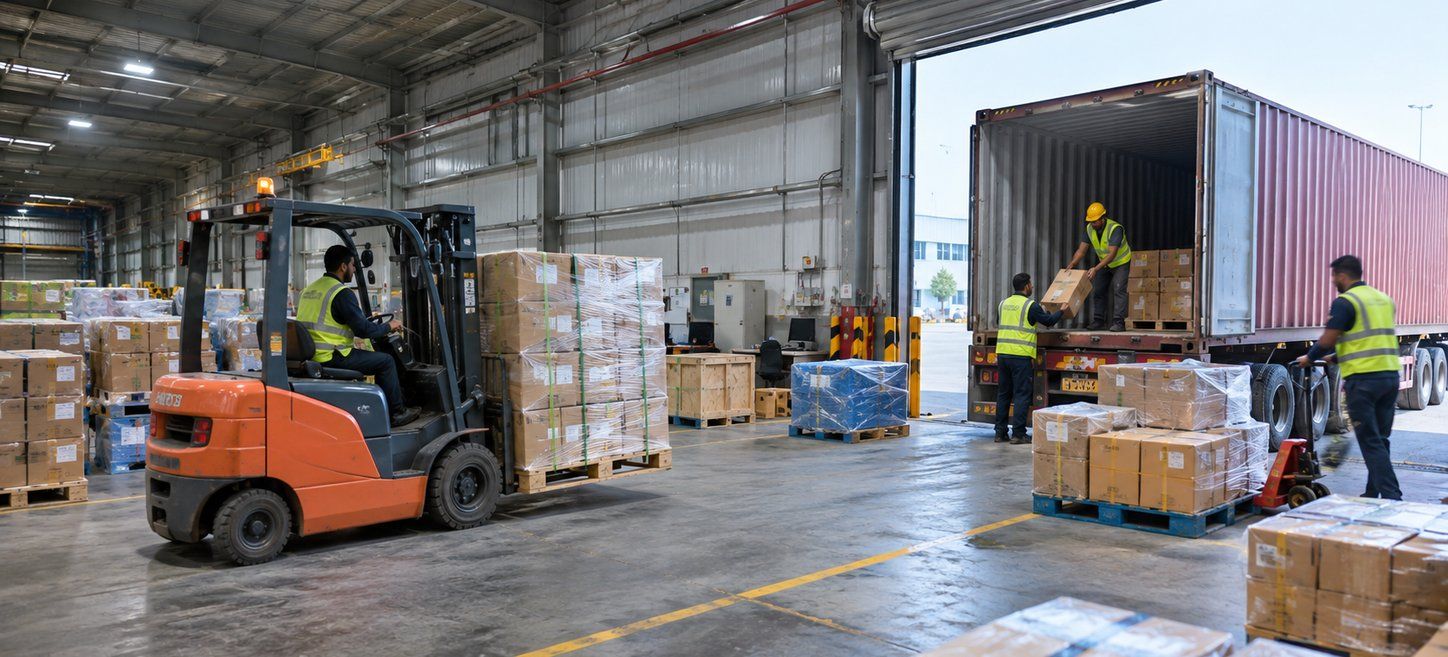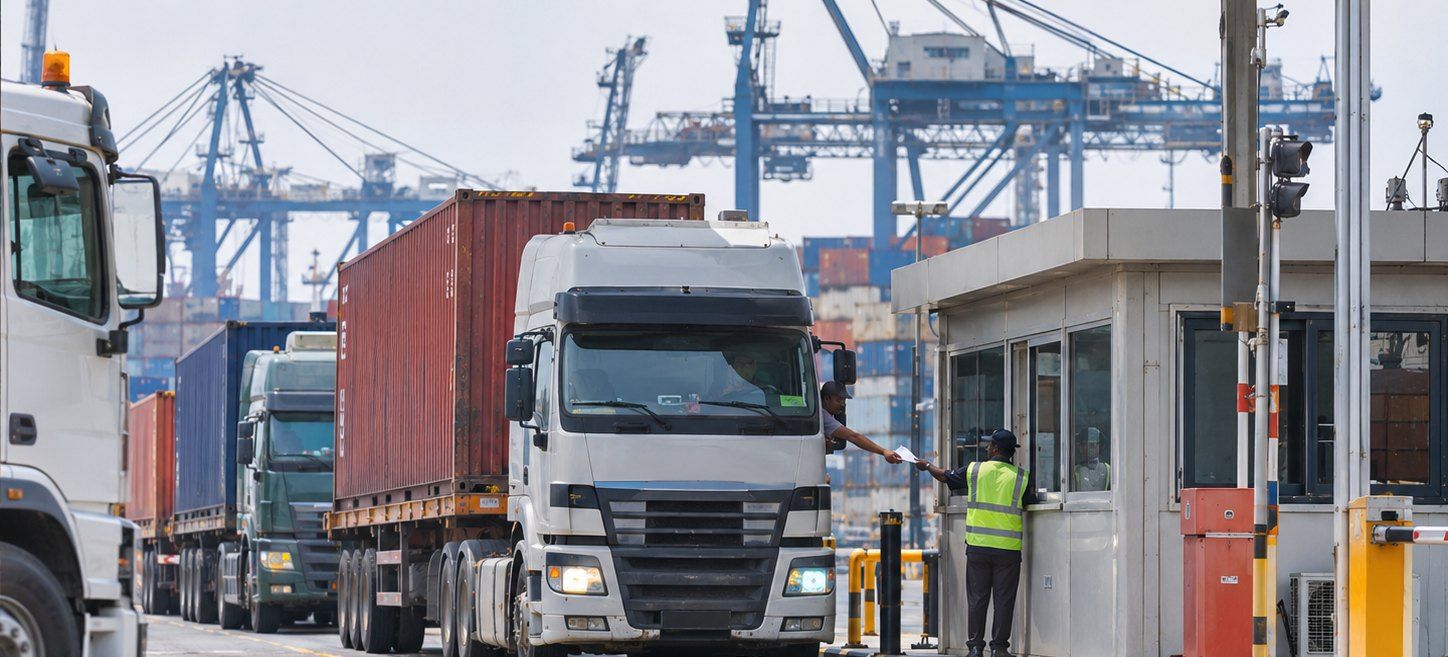
Short answer: demurrage is what a shipping line charges when a full container stays inside the port after its free days run out. Detention is what it charges when the container is outside the port — at your warehouse or on a truck — beyond its free days, until the empty box is returned. Both are charged per container, per day, and they add up quickly when clearance or collection is delayed.
Demurrage, detention and port storage
| Charge | Who charges it | When it applies |
|---|---|---|
| Demurrage | Shipping line | Full container still in the terminal after free days |
| Detention | Shipping line | Container outside the terminal after free days, until the empty is returned |
| Port storage | Terminal operator | Container occupying terminal space beyond the terminal’s free period |
Some lines combine demurrage and detention into a single allowance, often called “D&D” or combined free time. Check how your carrier counts it: a combined allowance can be used up entirely in the port if clearance is slow.
How free time works
- Free time starts when the container is discharged (import) or picked up empty (export), depending on the charge.
- Free days differ by shipping line, container type (dry, reefer, special equipment) and trade lane.
- Your documents show it. The arrival notice or booking confirmation states the free days and the daily rate after they expire.
- Rates usually increase the longer the container is held, in steps.
- Reefer and special equipment — open-tops and flat-racks — often have fewer free days and higher daily rates.
How to read your arrival notice
The arrival notice from the shipping line or NVOCC is where demurrage and detention start. Check these fields as soon as it arrives:
| Field | Why it matters |
|---|---|
| Estimated arrival (ETA) and discharge date | Free time is usually counted from discharge |
| Free days, and whether demurrage and detention are separate or combined | Decides how long you can take to clear and unload |
| Daily rates and the steps they rise in | Tells you what each extra day will cost |
| Charges to pay before the delivery order | Unpaid charges stop release |
| Empty return depot | Detention stops only when the empty reaches the named depot |
If the free time on the notice is shorter than what you agreed at booking, raise it straight away, not after the charges have built up.
Demurrage and detention on exports
Exporters face the same charges in reverse:
- Empty pick-up starts the clock. Collect the empty container only when the cargo is ready to load.
- Load and return to the terminal on time. Late gate-in can mean the container misses the vessel’s cut-off.
- A missed vessel costs twice: the container waits for the next sailing, and storage or detention keeps running.
- Get the export declaration and VGM ready before the cut-off, so the loaded container isn’t refused at the terminal gate.
Why containers get held in the UAE
The most common causes we see:
- Documents not ready on arrival — an invoice that does not match the packing list, a missing certificate of origin, or a delivery order not yet released. Our import documents checklist covers what Dubai customs asks for.
- Permits for controlled goods — food, cosmetics, chemicals or medicines without approvals in place.
- Customs inspection selected for the shipment.
- Unpaid charges — freight or local charges not settled, so the delivery order cannot be issued.
- No warehouse space or trucks when the container is released.
- Slow de-stuffing — the container sits at the warehouse after unloading because nobody books the empty return.
How to avoid demurrage and detention
Before the cargo sails
- Ask for enough free time at booking. If you know clearance or unloading takes time, negotiate extra free days up front — far easier than asking for a waiver later.
- Check permits early. Controlled goods need approvals before arrival, not after.
- Get documents right first time. Match invoice, packing list, bill of lading and certificate of origin.
When the vessel arrives
- Pay charges promptly so the delivery order is released on time.
- File the customs declaration in advance where possible.
- Book the truck and warehouse slot for the day the container is released.
After collection
- Unload quickly and book the empty return straight away. Detention keeps running until the empty is back at the depot.
- Consider de-stuffing at the port or a nearby warehouse if your premises cannot receive the container quickly.
For small shipments
- LCL avoids container demurrage and detention for the shipper — you collect your cargo from the CFS, where warehouse storage rules apply instead. See LCL shipping.
A simple example
An importer’s container has a number of free days at Jebel Ali. Clearance is delayed because a certificate of origin is missing, and the container stays in the terminal three days beyond its free time — three days of demurrage, plus terminal storage if the terminal’s own free period has also expired. Once cleared, the container sits at the warehouse waiting to be unloaded and is returned two days late — two days of detention. None of this freight cost was in the original quote, and all of it was avoidable.
How ARK helps
We check documents before arrival, coordinate customs clearance in Dubai and container haulage from Jebel Ali, and plan the empty return — so containers move out and back inside their free time. When we book your sea freight, we tell you the free days on the booking and can negotiate more where the carrier allows.