Sea Freight (FCL & LCL)
Full container (FCL) and shared container (LCL) shipping from Jebel Ali, with booking, documents and tracking handled by one team.

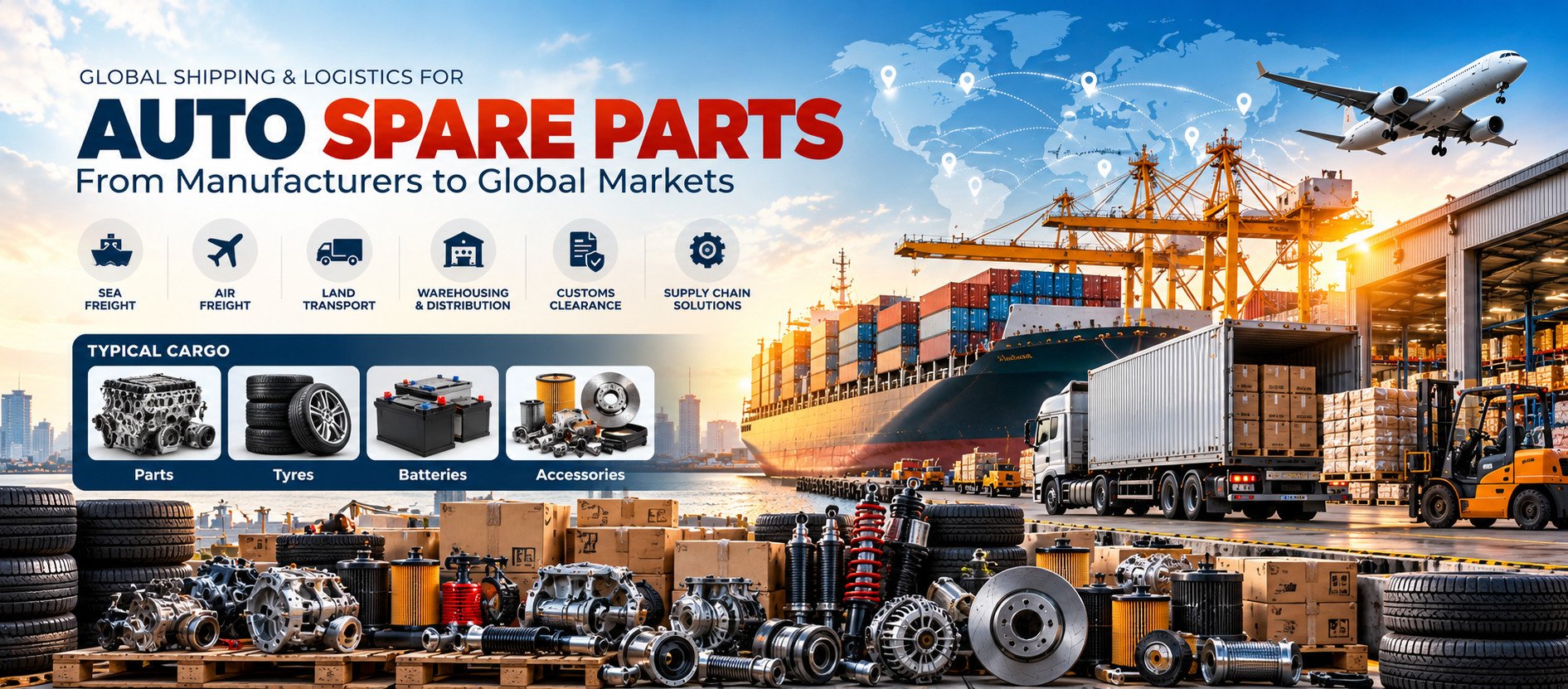
For auto spare parts traders importing and exporting parts, tyres, batteries and accessories.
Dubai is one of the world’s busiest hubs for vehicle spare parts, supplying workshops and distributors across Africa, South Asia and the Gulf. Orders mix fast-moving stock with urgent parts for vehicles that are off the road.
We split shipments by urgency — sea freight for stock, air for the parts a customer is waiting on — and handle the rules that apply to batteries and fluids.
How we handle it
Urgent parts by air; replenishment stock by FCL or LCL to keep freight cost per unit down.
Batteries and fluids reviewed against DG rules, with correct declarations and carrier acceptance confirmed before booking.
Multi-line invoices checked against packing lists and HS codes to avoid customs queries.
Tyre loads planned for 40′ high cube containers to maximise units per box.
EQUIPMENT
DOCUMENTS
Requirements vary by product and destination. We confirm the exact list when we quote.
A spare parts shipment can list hundreds of part numbers. Customs doesn't need every part number, but it does need descriptions it can classify. "Auto parts" on an invoice invites questions; "brake pads for passenger cars" does not.
| Item | Typical status | What to provide |
|---|---|---|
| Wet lead-acid batteries | Dangerous goods | SDS, DG declaration, approved packing |
| Lithium batteries | Dangerous goods (rules depend on type and size) | SDS, test summary, DG declaration |
| Engine oils and lubricants | Often non-DG, but check the SDS | SDS; non-DG declaration if not regulated |
| Brake fluid, coolant, sprays | Depends on the product | SDS for each product |
Always send the safety data sheet before booking. A DG item found in a general cargo booking can be refused at the terminal or the airport, and that affects the whole shipment.
This example is illustrative only. A parts distributor in Colombo buys from Dubai every month. Fast-moving stock, such as filters, brake pads and suspension parts, is consolidated in Dubai and shipped LCL each month, keeping freight cost per part low. When a customer's truck is off the road waiting for a gearbox part, that single part goes by air the same week. Splitting freight by urgency keeps the overall cost down without leaving customers waiting. See sea freight vs air freight for how to compare the two.
Services used
Full container (FCL) and shared container (LCL) shipping from Jebel Ali, with booking, documents and tracking handled by one team.
Time-critical and high-value cargo flown out of Dubai International (DXB) and Al Maktoum (DWC), with door pickup and clearance.
As a Non-Vessel Operating Common Carrier we issue our own house bill of lading and buy container space in bulk from ocean carriers.
Yes, but many batteries are dangerous goods. Wet lead-acid batteries, for example, must be declared, packed and labelled under dangerous goods rules. Send us the battery type and SDS and we will confirm the requirements.
Tyres are light and bulky, so a 40′ high cube container usually gives the best cost per tyre. Loading method (laced or stacked) also affects how many fit.
Yes. Urgent parts can move by air from Dubai International or Al Maktoum airports, while regular stock goes by sea.
They can be exported from the UAE, but many destination countries restrict or ban the import of used parts, or require inspection certificates. Check the buyer's country rules before shipping.
Tyres are usually loaded loose by hand, either stacked or "laced" (interlocked) to fit more per container. A 40′ high cube normally gives the lowest cost per tyre.
Sometimes, if the batteries are properly declared, packed and accepted by the carrier. Many LCL consolidators restrict DG, so mixed orders with batteries often move FCL or need a separate DG booking.
Many countries restrict or ban imports of used tyres, or apply age limits. Check the destination rules before buying stock for export.
Often yes. Many importing countries ask for a certificate of origin to apply the right duty rate, and a preferential certificate can reduce duty where a trade agreement applies.
Yes, as long as each is described accurately on the invoice. Brand-name parts may need proof of purchase from authorised suppliers at some destinations, to avoid counterfeit checks.




Share origin, destination and cargo details. Our Dubai team answers on WhatsApp, phone and email.