Short answer: a container seal is a numbered, single-use lock fixed to a container’s doors after loading. It shows whether anyone has opened the container since it was sealed. Most shipping lines require high security (H) seals under the ISO 17712 standard, usually bolt seals. The seal number is recorded on the bill of lading and must match the seal on the doors at every stage. A broken or different seal at delivery should be photographed and reported before unloading.
What a container seal does
A seal is not designed to stop a determined thief. It is designed to show tampering. When a container arrives with the same intact seal that was fitted at origin, everyone in the chain can be reasonably confident that the doors were not opened in transit. Seals support:
- Cargo security, by making theft and tampering visible.
- Customs control, by linking a container to its declaration.
- Insurance claims, by showing where a loss is likely to have happened.
- Supply chain security programmes, which require high security seals and inspection routines.
ISO 17712 seal classes
ISO 17712 is the international standard for mechanical freight container seals. It classifies seals by strength:
| Class | Name | Typical seals | Use |
|---|---|---|---|
| I | Indicative | Plastic strap seals, thin wire seals | Shows tampering but is easily broken; internal use |
| S | Security | Lighter cable or metal seals | Moderate strength |
| H | High security | Bolt seals, heavy cable seals | International container shipping |
Shipping lines generally require H-class seals on containers they carry. Security programmes, such as the US Customs and Border Protection C-TPAT programme, also require ISO 17712 high security seals.
Types of container seal
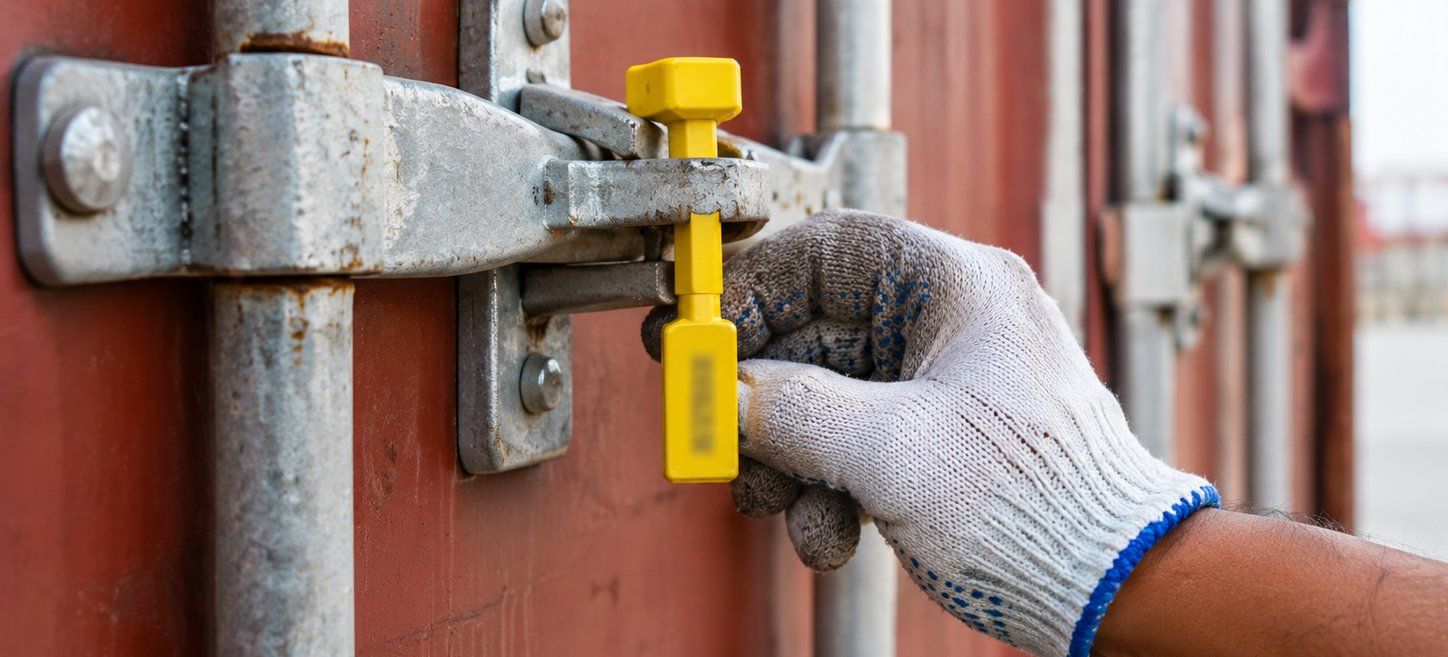
- Bolt seals: a steel bolt and a locking barrel that snap together and must be cut off with bolt cutters. The most common seal on shipping containers.
- Cable seals: a steel cable passed through the door handles and locked. They fit doors where a bolt is awkward and are rated H if strong enough.
- Plastic and indicative seals: for low-risk uses such as internal trailers or cartons, not for international sea containers.
- Electronic seals (e-seals): combine a physical seal with an electronic tag that can record or report when it is opened.
Every seal carries a unique number, often with a barcode, printed on both parts so the two halves can be matched.
Who applies the seal
- FCL: the shipper or its packer usually fits the seal after loading, using a seal supplied by the shipping line. The carrier records it, and the bill of lading usually carries “shipper’s load, stow and count”.
- LCL: the container freight station fits the seal after consolidating cargo from several shippers. See container yard vs container freight station.
- Customs: if customs opens a container for inspection, it fits a new seal afterwards and records the new number.
How to apply a seal correctly
- Inspect the empty container before loading for damage, holes, false walls and odours.
- Load and secure the cargo. See cargo lashing and securing.
- Close both doors and check the locking bars are engaged.
- Fit the seal on the right-hand door, through the locking handle hasp, so the door cannot open without breaking it.
- Check the seal: pull and twist it to confirm it has locked.
- Record the seal number and photograph the sealed doors with the container number visible.
- Send the number to your forwarder for the bill of lading.
The VVTT check
Many security programmes use VVTT to check a seal:
- View the seal and the locking mechanism.
- Verify the seal number against the documents.
- Tug on the seal to make sure it is properly fixed.
- Twist and turn the bolt to check it does not unscrew.
Pre-loading inspection: the seven-point check
Security programmes such as C-TPAT promote a seven-point container inspection before loading:
- Front wall
- Left side
- Right side
- Floor
- Ceiling and roof
- Inside and outside of the doors, including the locking mechanism
- Outside and undercarriage
Recording the inspection, with photographs, helps if a problem is found later.
The seal number on your documents
The seal number appears on:
- The bill of lading. See what is a bill of lading.
- The packing list and, often, the VGM declaration.
- The carrier’s and terminal’s systems.
- The customs declaration, where required.
A mismatch between the seal on the doors and the number on the bill of lading can lead to questions at customs and delays at release. Check the number before the bill of lading is issued.
What to do if a seal is broken, missing or different
At delivery, always check the seal before opening the doors.
- Do not open or unload if the seal is broken, missing or has a different number.
- Photograph the seal, the doors and the container number.
- Note the discrepancy on the delivery receipt or equipment interchange receipt before signing.
- Inform your forwarder, the carrier and your cargo insurer straight away.
- Check for a customs inspection. A different seal may simply mean customs inspected the container and fitted a new one, which will be recorded.
- Unload in the presence of a surveyor if a loss or damage claim is likely.
Reporting quickly protects your right to claim. Late reports are much harder to prove.
Seals and customs in Dubai
At Jebel Ali, containers selected for inspection are opened by customs and resealed afterwards. The new seal number is recorded, so a changed seal after inspection is normal. If you track a container that shows an inspection, expect a new seal number at delivery. See container enquiry on Dubai Trade.
An illustrative example
This example is illustrative only. A Dubai exporter loads a 40′ container of electronics. The packer fits the line’s bolt seal, photographs the sealed doors and sends the seal number to the forwarder, who includes it on the bill of lading draft. At destination, the consignee finds a different seal number. Before unloading, the consignee checks with its broker, who confirms that customs inspected the container and recorded a new seal. The cargo is counted against the packing list and found complete.
Who supplies the seal, and what it costs
Shipping lines usually supply their own branded high security seals with the empty container, or through their depot or agent. The seal is often included in the carrier’s documentation or equipment charges, though some lines charge separately. Forwarders and CFS operators that consolidate LCL cargo use their own approved seals. If you use your own seals, make sure they meet ISO 17712 high security requirements and that the carrier accepts them, and keep a record of every number you issue.
Seals on LCL and groupage shipments
On LCL shipments, you do not control the container seal, because the CFS seals the box after loading cargo from several shippers. Your protection comes from good packaging, clear marks and an accurate receipt at the CFS. If you ship high-value goods by LCL, consider stronger packaging such as crates, and discuss extra security measures or insurance cover with your forwarder.
Key takeaways
- A container seal shows whether a container has been opened since it was sealed.
- ISO 17712 classes seals as indicative, security or high security; carriers require high security seals.
- Bolt seals are the most common high security seal on shipping containers.
- Record and photograph the seal number, and make sure it matches the bill of lading.
- Check every seal at delivery, and report discrepancies before unloading.
- A new seal number may be explained by a customs inspection, so check before assuming theft.
Shipping containers securely from Dubai
Our team arranges FCL sea freight and LCL consolidation from Jebel Ali, with customs clearance at both ends. Request a quote for your next shipment.