Short answer: cargo lashing is the use of straps, chains, wire or similar devices to tie cargo down inside a container so it cannot move. It works together with dunnage (airbags, timber or mats that fill gaps) and blocking and bracing (timber frames that stop cargo sliding). In a full container load, the shipper or packer is responsible for securing the cargo, and good practice is set out in the CTU Code.
Why cargo moves in transit
Cargo in a container goes through more stress than most shippers expect. A container ship rolls from side to side and pitches front to back in rough seas. A truck brakes hard, turns corners and drives over uneven roads. Cranes and reach stackers lift and set containers down with a jolt.
Each movement creates forces that push the cargo forwards, backwards, sideways and upwards. Without securing, heavy items slide, stacks topple and cartons crush. That damages the goods, the container and sometimes neighbouring cargo. In the worst cases, shifting cargo makes a container unsafe to handle.
The CTU Code: the reference for container packing
The IMO/ILO/UNECE Code of Practice for Packing of Cargo Transport Units, known as the CTU Code, is the international guide to packing and securing cargo in containers, trucks and rail wagons. It covers weight distribution, securing methods and how to check a unit before and after loading. Shippers who follow its principles reduce damage and claims.
Types of cargo lashing
| Method | Best for | Notes |
|---|---|---|
| Polyester webbing straps (ratchet) | Pallets, crates, general cargo | Light, reusable, do not scratch cargo; check the rated strength |
| One-way composite or woven lashing | Export cargo where straps will not return | Used with buckles; tensioned by hand tool |
| Steel chains with tensioners | Heavy machinery, vehicles, steel | Very strong; need protection where they touch cargo |
| Wire rope | Heavy or project cargo | Requires proper clamps and fittings |
| Steel strapping (banding) | Bundling pipes, steel and timber | Holds units together; not a substitute for lashing to the container |
Lashing points inside a container
Standard dry containers have lashing rings or bars along the floor edges and on the corner posts and side rails. Each point has a maximum load it can take. Lashing must be spread across enough points so that none is overloaded, and straps should be attached at sensible angles rather than pulled tight across sharp edges.
Dunnage: filling the gaps
Dunnage is any material used to fill empty space or protect cargo. Gaps are the main reason cargo moves, because a load with room to slide picks up speed before it stops.
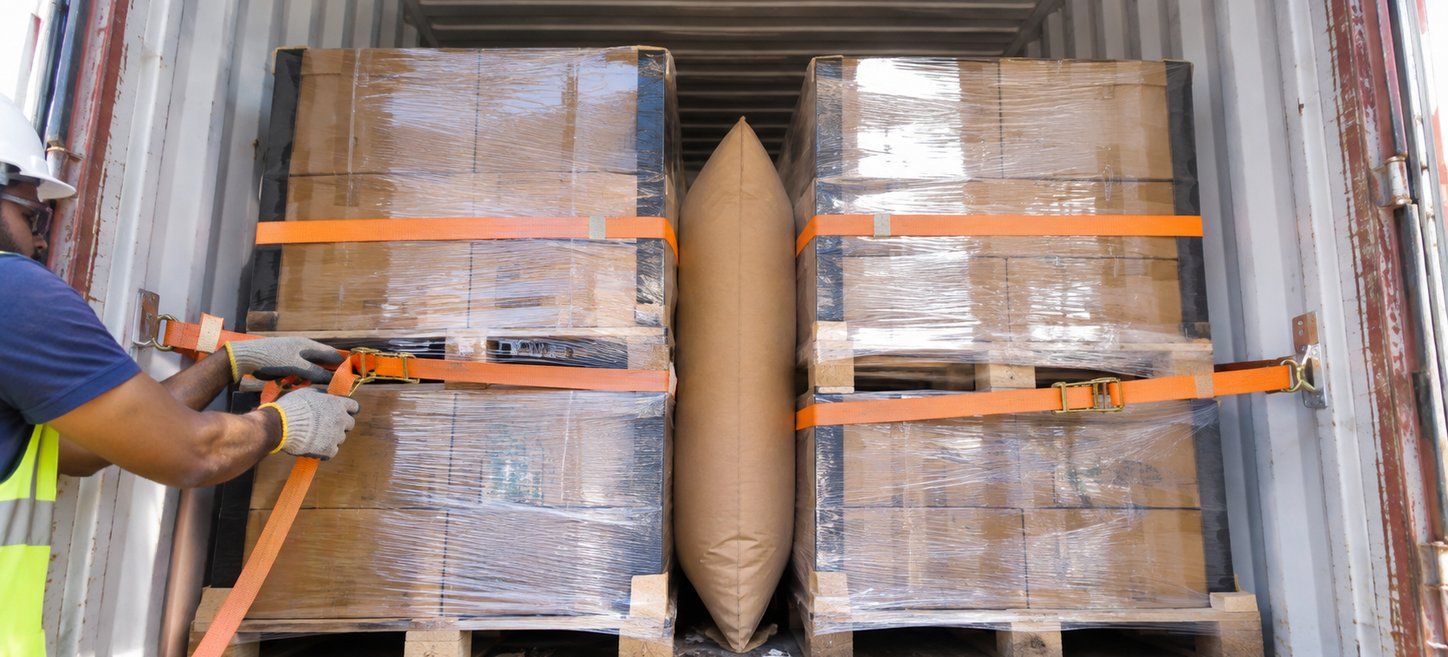
- Dunnage airbags are inflated between cargo rows or between cargo and the container wall to lock the load in place. They are quick to fit and suit palletised goods.
- Timber is cut to fill gaps and build supports.
- Cardboard and foam protect surfaces and edges.
- Anti-slip mats increase friction between cargo and the floor, reducing the lashing needed.
Blocking and bracing
Blocking and bracing uses timber or steel to build a frame that stops cargo sliding. A typical example is a timber frame nailed or wedged across the container width behind the last row of pallets, so the load cannot move towards the doors. Heavy machinery on flat racks is usually chocked with timber blocks and then chained down.
Weight distribution: the rule most shippers break
Securing only works if the load is distributed correctly.
- Spread weight evenly across the container floor. Do not put all the heavy cargo at one end.
- Keep the centre of gravity low and central: heavy items at the bottom, light items on top.
- Do not exceed the container’s maximum payload, and remember that road weight limits can be lower than the container’s rating.
- Avoid concentrated loads on a small area of floor. Heavy items need timber beams underneath to spread the weight.
- Declare the verified gross mass (VGM) accurately before loading on the vessel.
A container loaded heavily at one end can be dangerous to lift and may be refused at the terminal.
Securing common cargo types
Palletised cartons
Stretch-wrap each pallet, load pallets tightly together, fill gaps with airbags, and strap the last row across the container width. Avoid double-stacking pallets unless the bottom pallet can take the weight.
Machinery and equipment
Bolt or chain machinery to a skid or crate, chock it with timber, and lash it to the container’s lashing points. Very heavy or oversized machines often go on a flat rack, where chains and timber are essential.
Steel, pipes and long items
Bundle with steel strapping, place on timber bearers to spread weight, and block both ends. Long items need extra bracing to stop them sliding towards the doors.
Bags (rice, polymer granules, cement)
Stack in an interlocking pattern, keep stacks even, and use timber or cardboard at the doors to stop bags bulging out. Dense bagged cargo often reaches the payload limit before the container is full, which is one reason it ships in 20′ containers. See polymer granules and plastics and food products.
Furniture
Wrap pieces individually, stand them so they support each other, and fill gaps to prevent rubbing. See furniture shipping.
A pre-loading checklist
- Inspect the container: dry, clean, no holes, doors seal properly, floor in good condition.
- Plan the load: weights, positions and where the lashing points will be used.
- Check packaging: cartons strong enough for stacking, pallets in good condition.
- Load heavy items first and keep the weight centred.
- Fill all gaps with dunnage or airbags.
- Lash and brace the final row and any heavy or loose items.
- Photograph the loaded container before closing the doors.
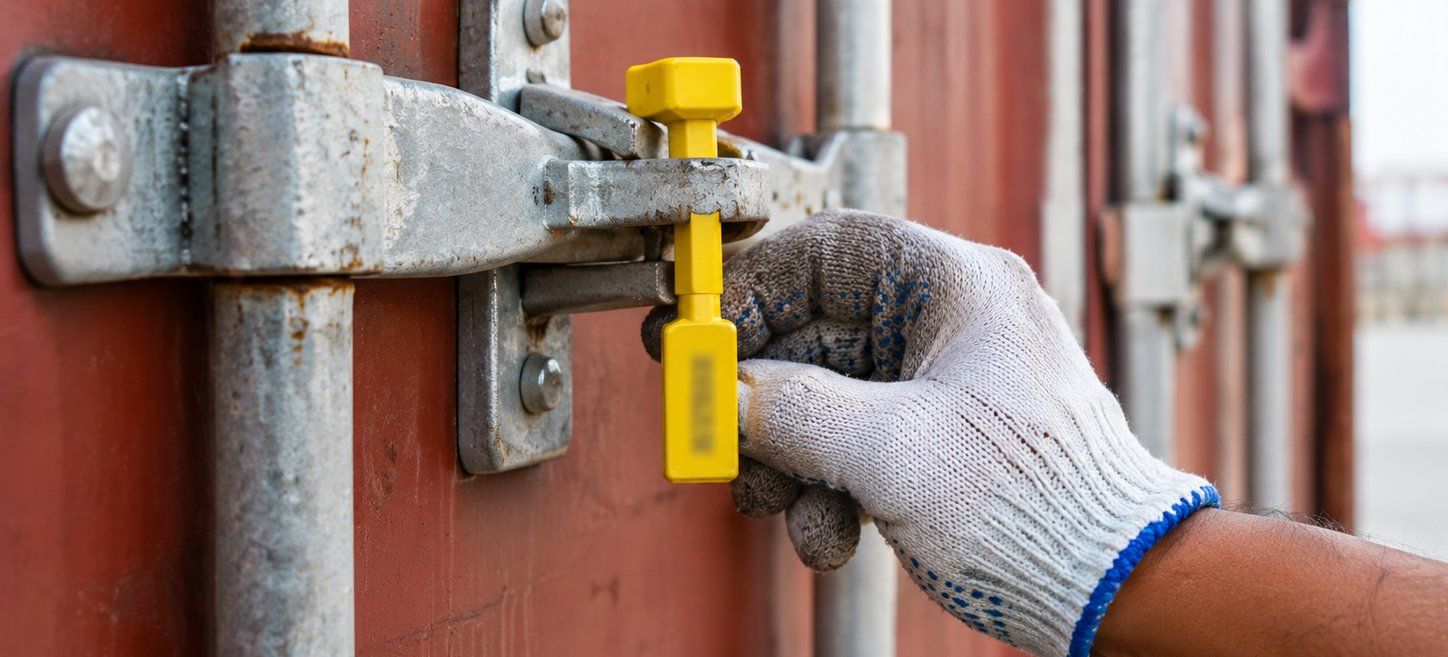
- Record the seal number on the documents.
Photos of the loaded container are valuable evidence if there is a damage claim.
Who is responsible?
In a full container load (FCL), the shipper or the company that packs the container is responsible for loading and securing it correctly. The shipping line carries the sealed container but does not check what is inside.
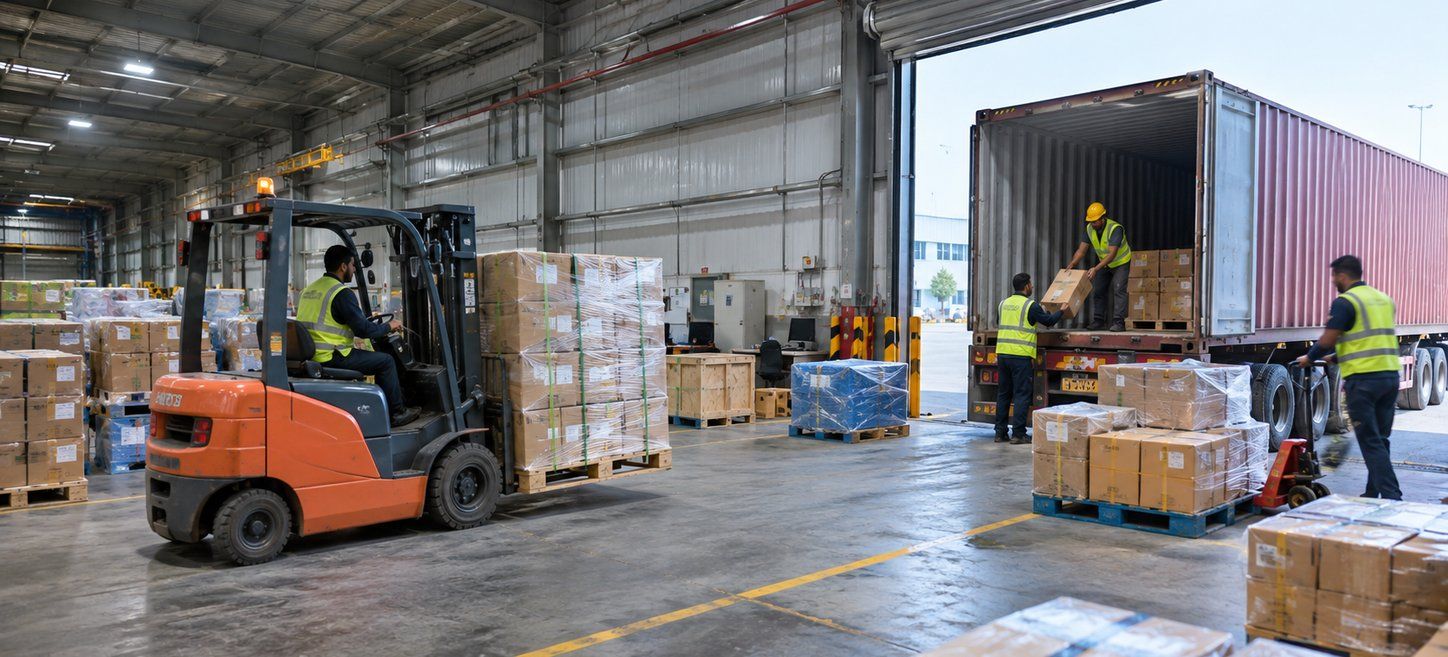
In LCL, the consolidator’s warehouse packs your cargo together with other shippers’ goods. Your job is to deliver cargo that is well packed and labelled, on pallets or in strong cartons that can be stacked. See LCL shipping from Dubai.
Securing cargo on flat racks and open tops
Flat rack and open top containers carry cargo that is too large or heavy for a standard box, such as machinery, vehicles, boats and steel structures. This cargo is exposed to wind, spray and stronger movement, so securing is critical.
- Place the cargo on timber bearers to spread the load across the floor.
- Chock wheels and edges with timber blocks fixed in place.
- Use chains or wire with tensioners to lashing points on all sides.
- Cover sensitive parts with waterproof tarpaulins secured against wind.
- Ask the carrier or a surveyor to approve the securing plan for heavy or high-value units.
Common securing mistakes
- Leaving gaps at the door end, so the load slides when the truck brakes.
- Lashing over sharp edges without protection, so straps cut.
- Using too few lashing points for heavy items.
- Stacking heavy cartons on light ones.
- Forgetting that the container’s lashing points have a maximum load.
Key takeaways
- Lashing ties cargo down; dunnage fills gaps; blocking and bracing stops cargo sliding.
- The CTU Code is the international reference for packing and securing cargo in containers.
- Spread weight evenly, keep the centre of gravity low and never exceed the payload.
- Each lashing point has a maximum load, so use enough points for heavy items.
- In FCL, the shipper or packer is responsible for securing the cargo.
- Photos of the loaded container are strong evidence if a damage claim is needed.
Damage, claims and insurance
When cargo arrives damaged, the cause matters. Damage from poor packing or securing by the shipper is often excluded from carrier liability and can affect insurance claims. Good packing, correct securing and loading photos protect your position.
If your goods are valuable or fragile, talk to your forwarder about the right container type and securing method before booking. Our team can arrange container loading and inspection in Dubai. Request a quote with your cargo details, or see our sea freight service.