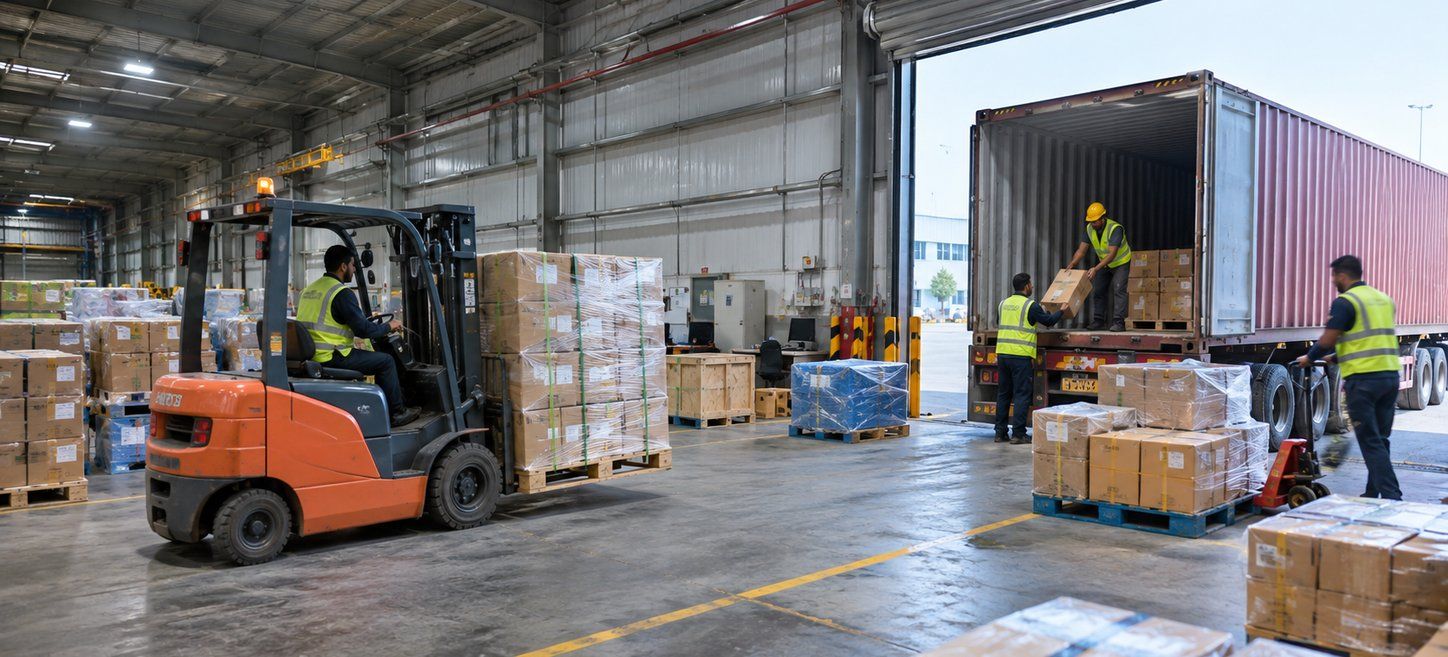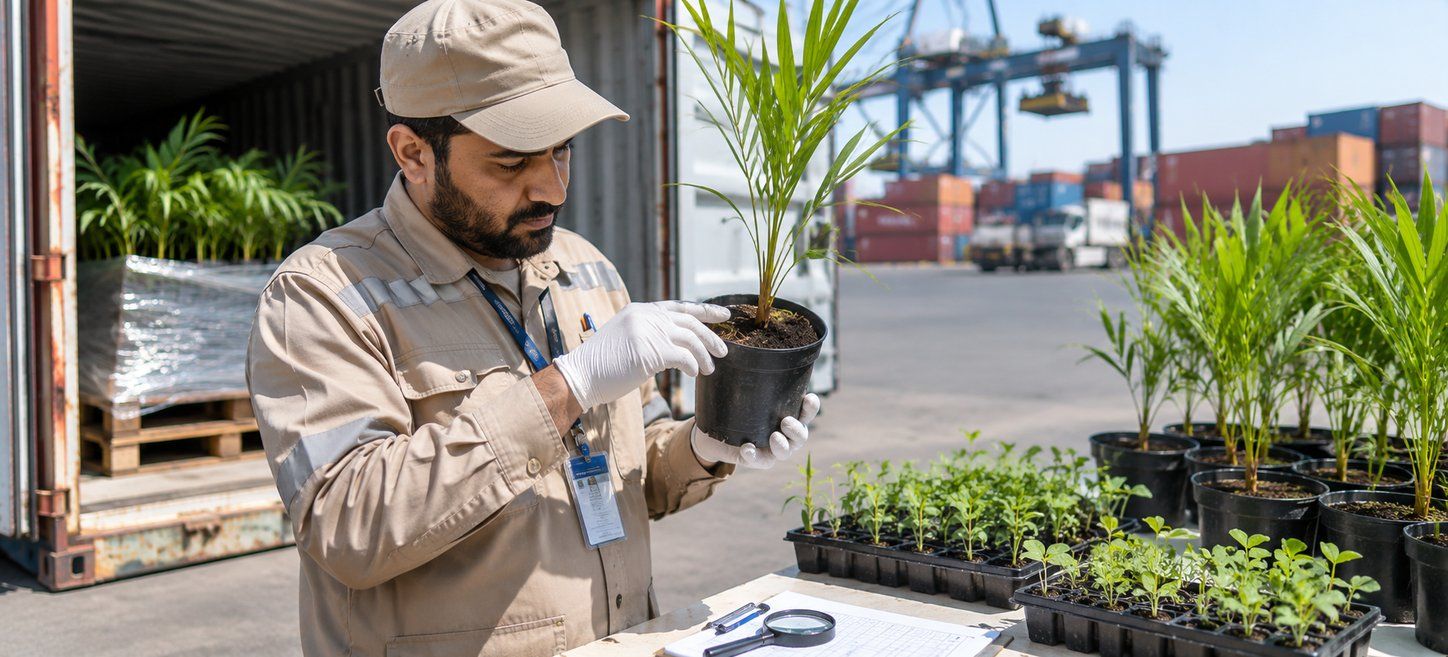
Short answer: the UAE Ministry of Climate Change and Environment (MOCCAE) controls imports that could carry pests, disease or environmental risk. That means live plants and seeds, live animals and animal products, veterinary products, animal feed, fertilisers and pesticides. These goods generally need a MOCCAE import permit issued before shipment, plus a health or phytosanitary certificate from the country of origin. Only the items listed on the permit are accepted, so your paperwork must match the cargo exactly.
ARK Shipping doesn’t issue permits. We ship and clear the goods. This guide covers what has to be in place first.
What needs a MOCCAE permit
| Goods | What is usually required |
|---|---|
| Live plants, seedlings, palm offshoots | Import permit + phytosanitary certificate; no natural soil |
| Seeds, bulbs, tubers | Import permit + phytosanitary certificate |
| Live animals and birds | Import permit + veterinary health certificate; quarantine rules may apply |
| Hatching eggs, fish broodstock and larvae | Import permit + health certificate |
| Veterinary medicines and vaccines | Product registration + import permit |
| Animal feed and fodder | Import permit; registration for some products |
| Pesticides | Registration with MOCCAE + import permit |
| Fertilisers and soil conditioners | Registration + import permit |
Some products in other groups, such as food of animal origin, may also need MOCCAE approvals as well as municipality food registration. For food, see our FIRS guide.
Registration comes first for agricultural chemicals
For pesticides, Ministerial Decision No. 27 of 2018 requires registration with MOCCAE before any import, export or trade. The rules also restrict where pesticides can be sourced, generally from the manufacturer or its branches. Fertilisers and soil conditioners have their own registration requirement.
So the order is:
- Register the product with MOCCAE.
- Apply for the import permit for the shipment.
- Ship, with the permit and origin certificates matching the cargo.
Many pesticides and some fertilisers are also dangerous goods for transport. That affects packing, labelling and which vessels or flights will accept them. Tell your forwarder before booking.
Plants and seeds: the details that matter
- No natural soil. Plants generally must travel in an approved growing medium, not soil.
- Phytosanitary certificate from the plant protection authority in the country of origin, matching the species and quantities on the permit.
- Species names on the invoice and packing list should match the permit. Common names alone can cause queries.
- Inspection on arrival. Consignments can be inspected and, if pests are found, treated, re-exported or destroyed.
Live animals
Live animal imports are among the most tightly controlled. Expect a veterinary health certificate, possible vaccination and testing requirements, and quarantine rules depending on the species and origin. Plan the route, the timing and arrival handling together with the receiving party.
Pets and endangered-species products
Two smaller groups also go through MOCCAE and often surprise importers:
- Pets and companion animals. Expect a veterinary health certificate, vaccination records (including rabies, where required) and microchip details, plus an import permit before travel. Rules differ by species and origin country, so check them before booking the animal’s travel.
- Products from protected species. Goods covered by CITES (the international convention on trade in endangered species) need CITES paperwork as well as any other approvals. Examples include some agarwood (oud) products, certain wildlife-derived materials and some exotic plants. Check whether your goods are listed before you buy them, because a missing CITES permit can mean the goods are seized.
What happens at inspection
Regulated agricultural and animal consignments are checked when they arrive. Depending on the goods, inspectors may:
- Check the documents: permit, phytosanitary or health certificate, invoice and packing list.
- Examine the goods for pests, disease, soil or damage, sometimes taking samples to a laboratory.
- Release the consignment if everything matches.
- Order treatment, re-export or destruction if pests, disease or prohibited material is found, or if items aren’t on the permit.
The importer usually bears the cost of treatment, re-export or destruction, plus port storage while the decision is made. Getting the paperwork right is far cheaper than any of these.
Mixed shipments need extra care
Problems often come from consolidated or mixed cargo:
- A few plants packed with general cargo. The whole container can be held for inspection.
- Seeds sent as samples without a permit, assuming small quantities are exempt.
- Fertiliser or pesticide added to a farm equipment shipment without registration.
- Unlisted species added by the supplier to fill space in a nursery order.
If any regulated item is in the shipment, the whole consignment’s paperwork should account for it.
Example: ornamental plants for a landscaping project
This example is illustrative only. A Dubai landscaping company orders ornamental shrubs and palm seedlings from a nursery abroad for a villa project.
- The company’s licence covers importing plants. It applies to MOCCAE for an import permit listing each species and quantity.
- The nursery replaces soil with an approved growing medium and arranges the phytosanitary certificate with the plant protection authority in the country of origin, matching the permit.
- The plants travel in a ventilated container to Jebel Ali, timed to arrive while the permit is valid.
- On arrival, inspectors check the documents and examine a sample of plants. One species missing from the permit would be rejected, so the company had checked the packing list against the permit before shipping.
- The consignment is released and delivered to the site.
Before you book
- Get the permit number and listed items from the importer, and compare them with the commercial invoice and packing list.
- Check the permit’s validity against the arrival date, not the shipping date.
- Make sure origin certificates will be issued in time and travel with the documents.
- For temperature-sensitive plants, seeds or veterinary products, plan reefer or controlled storage.
How ARK helps
- Share the product list and permit details with your quote request, and we will check the documents and container type the shipment needs.
- We arrange sea freight, including reefer containers, and air freight for live or perishable consignments.
- Our customs clearance team presents the permit and certificates at entry and handles inspection queries. We work with agricultural product shippers.
Official source
- Ministry of Climate Change and Environment: moccae.gov.ae, for import permits, registration services and fees
Permit rules and fees change. Confirm the current requirements with MOCCAE before you ship.