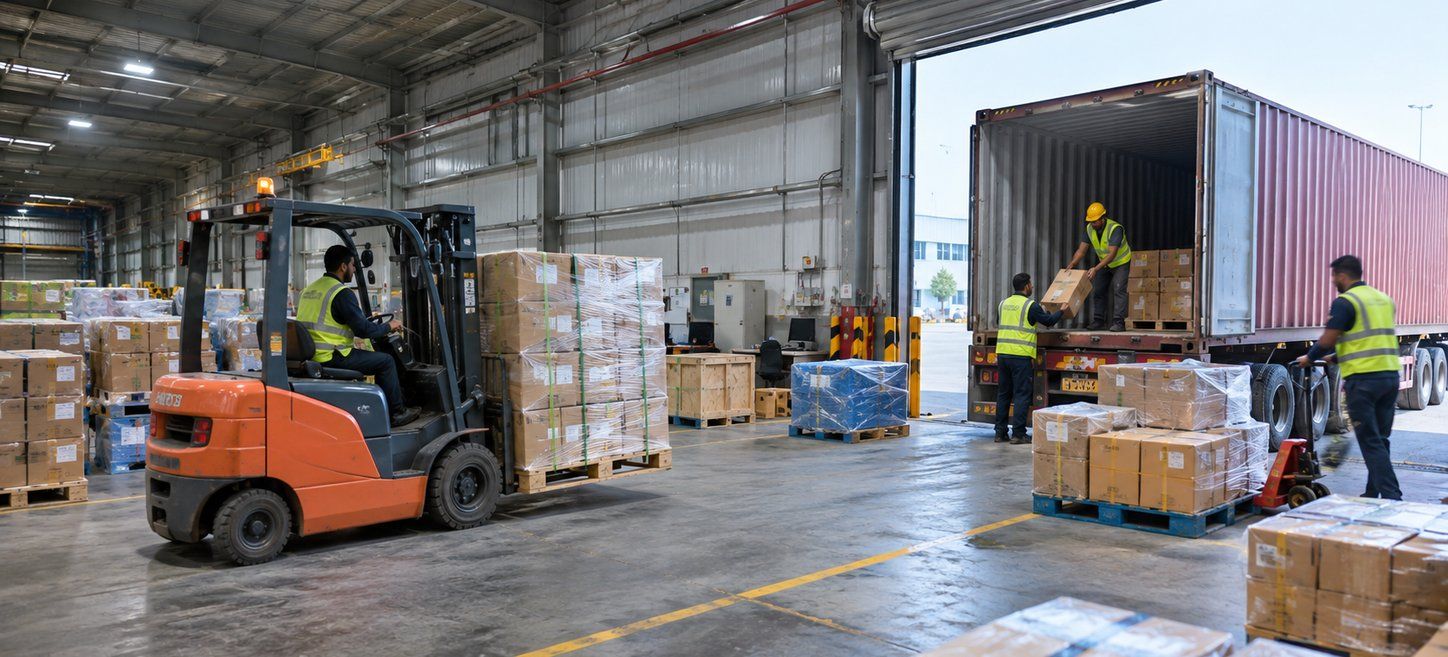
Short answer: to import food into Dubai, the importer must be registered with Dubai Municipality as a food consignee through FIRS, the Food Import and Re-export System. Food items and their labels are registered and assessed through the municipality’s systems, and each consignment is checked, and can be inspected, before release. Labels need Arabic. Do the registration before the food ships. Food waiting at the port is losing shelf life.
ARK Shipping doesn’t register food products. We ship and clear them. This guide explains the approvals that must be in place first.
Who needs FIRS
Any business bringing food into Dubai to sell, distribute or re-export. That includes:
- Food traders and distributors
- Supermarkets and retailers importing directly
- Restaurants and hotel groups importing their own supplies
- Re-exporters using Dubai as a hub for other markets
You will usually need a UAE trade licence that includes food trading before you can register.
The three things to have ready
| Step | What it means | When |
|---|---|---|
| Consignee registration | Your company is registered in FIRS as an authorised food importer | Once, then kept up to date |
| Item and label registration | Each food product and its label is registered and assessed | Before the first shipment of that product |
| Consignment release | Each shipment is declared, documents checked and the cargo released | Every shipment |
The municipality also links food registration with federal systems, so check which portal applies to your products when you start.
Within the food system, you will see separate services for registering a food item, assessing its label, a combined registration and label assessment, and entry permits for food shipments. Service names and codes change from time to time, but the logic stays the same: the product and its label are approved once, and each shipment then needs its own release.
Label rules importers get wrong
Labels cause more food delays than anything else. A Dubai food label generally needs:
- Arabic text. It can sit alongside English, or appear on a securely fixed sticker where the rules allow.
- Product name and brand
- Ingredients, including allergens
- Net quantity
- Production and expiry dates, in a clear format
- Country of origin
- Producer or packer name and address
- Storage conditions, where relevant
Check the current labelling standard before printing. A problem found at the port means re-labelling under supervision, or worse, while the reefer or storage charges keep running.
Health certificates and other documents
Depending on the product, food shipments commonly need:
- Health certificate from the authority in the country of origin
- Certificate of origin
- Halal certificate for meat, poultry and products containing them, from an accepted body
- Commercial invoice, packing list and bill of lading, which must match the registered products
Our customs clearance documents checklist covers the general set. Some foods also need federal approvals. For example, plant and animal products can need permits from the climate and environment ministry; see the MOCCAE import permit guide. A few drinks and dairy products need the Emirates Quality Mark.
Food for re-export
Dubai is a major food re-export hub, and FIRS treats re-export cargo differently from food for the local market. When you apply, you state whether the consignment is for local sale or re-export:
- Food for re-export must leave within the time limit the municipality sets, and can generally be extended only with approval.
- If a re-export consignment is later sold locally, the local-market rules, including registration and labelling, apply first.
- Paperwork for the onward shipment should match the original import, so keep invoice and batch details consistent.
Declare the right purpose from the start. Switching later is slower than getting it right on the first application.
Common reasons food consignments are held
- Label errors: missing Arabic, unclear dates, or a label that differs from the registered one.
- Short remaining shelf life on arrival.
- Missing or mismatched health certificates, or quantities that don’t match the invoice.
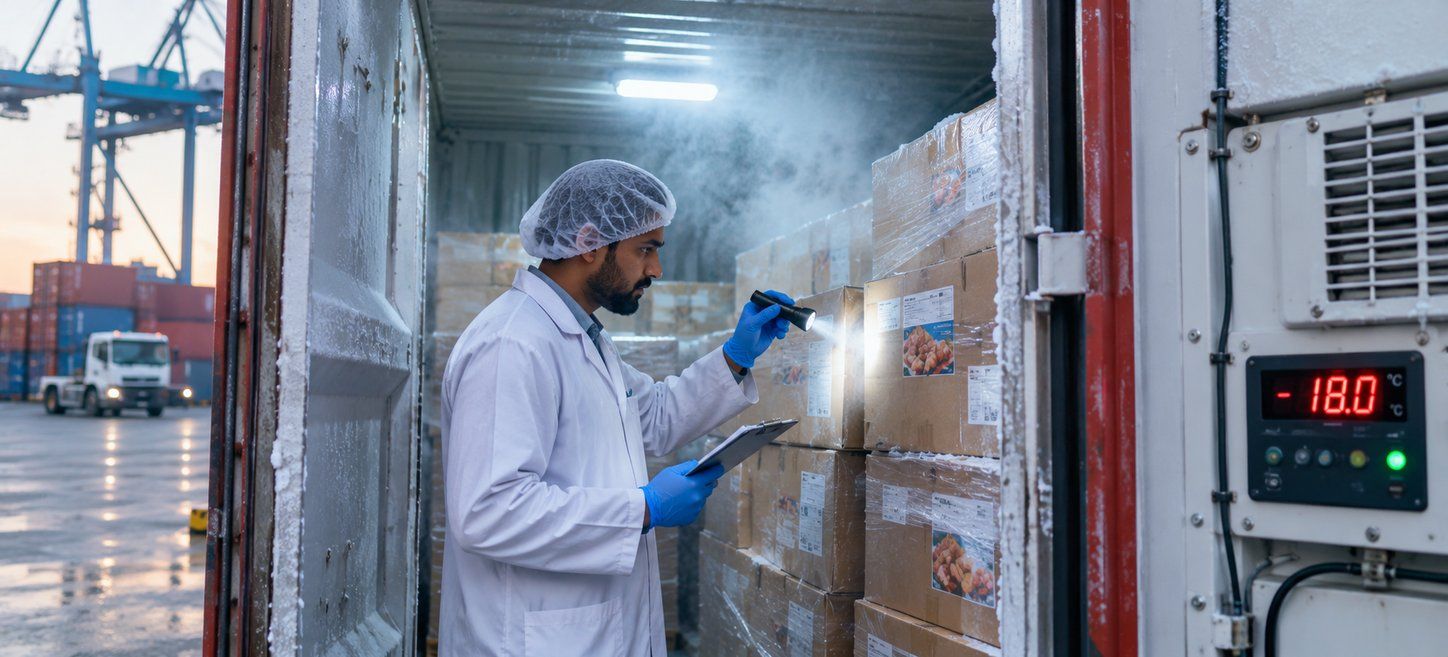
- Temperature problems, such as a reefer log showing breaks in the cold chain.
- Unregistered items mixed into an otherwise approved shipment.
Example: frozen food from India to Jebel Ali
This example is illustrative only. A Dubai distributor imports frozen vegetables and ready meals from a packer in India for local supermarkets.
- The distributor’s company is already registered as a food consignee. The two new ready meals are registered, and their labels are assessed before production.
- The packer prints labels with Arabic and English text, including production and expiry dates, and arranges the health certificate.
- A 40ft reefer container is booked at −18°C from Nhava Sheva (JNPT) to Jebel Ali. The temperature log travels with the documents.
- On arrival, the consignment is declared. Because it includes new products, the municipality samples them before release.
- The container is moved to cold storage, and the stock goes to retailers with enough shelf life left.
Pre-shipment checklist for food importers
- Company registered as a food consignee and the registration is current.
- Every product in the shipment is registered, with the exact label being shipped.
- Arabic labelling is complete, and dates are printed in a clear format.
- Health certificate, certificate of origin and, where needed, halal certificate are arranged.
- Quantities and product names match across the invoice, packing list and registrations.
- Container type and temperature setting are agreed with the supplier.
- Storage is ready for arrival, especially for chilled or frozen goods.
Planning a food shipment
- Pick the right container. Chilled and frozen food needs a reefer set to the right temperature. Dry food still benefits from good ventilation and packing.
- Allow time for inspection. Food can be sampled or inspected on arrival, especially the first shipment of a new product.
- Watch the shelf life. Choose routes and transit times so enough shelf life remains on arrival. Retailers often reject stock close to expiry.
- Arrange storage. Temperature-controlled warehousing lets you hold stock while release is completed.
How ARK helps
- We arrange sea freight in dry or reefer containers, and air freight for urgent or short-life products.
- Tell us your products and origin when you ask for a quote. We will check the documents the shipment will need before it sails.
- Our customs clearance team clears the consignment once your FIRS approvals are in place.
Food is one of the main sectors we work with. See food and beverage logistics.
Official source
- Dubai Municipality: dm.gov.ae, for food import services, FIRS, labelling requirements and guidelines
Food rules, portals and labelling standards change. Confirm current requirements with Dubai Municipality before you ship.