Short answer: the Emirates Quality Mark (EQM) is a UAE quality mark run by the Ministry of Industry and Advanced Technology (MoIAT). It shows that a product meets UAE standards and that the factory runs a controlled quality system. For most products it is voluntary. MoIAT makes it mandatory for a few products, which have included bottled drinking water and some dairy, juice and beverage products. ECAS is the minimum legal requirement for regulated goods; EQM is the higher, optional step for most others.
ARK Shipping does not certify products. This guide helps you decide whether EQM matters for your goods and your shipping plan.
ECAS vs EQM at a glance
| ECAS | EQM | |
|---|---|---|
| What it proves | The product meets UAE technical regulations | The product meets UAE standards and the factory has a quality system |
| Mandatory? | Yes, for regulated products | Mostly voluntary; mandatory for a short list |
| Factory audit | Not usually | Yes |
| Typical validity | Usually one year | Commonly quoted as three years, with surveillance |
| Who runs it | MoIAT | MoIAT |
For the mandatory scheme, read our ECAS certificate guide.
When EQM is required
MoIAT sets the mandatory list, and it changes. Products that have been on it include:
- Bottled drinking water and ice for human consumption
- Some dairy products and milk
- Juices and some beverages
If your product is on the current list, you can’t sell it in the UAE without EQM, whatever other approvals it has. Food products also need food registration with the municipality; in Dubai that is FIRS.
When EQM is worth it voluntarily
For most products EQM is a business decision, not a legal one. It can make sense when:
- You sell into government or semi-government projects. Some tenders give preference to products carrying recognised UAE quality marks. Check the tender documents.
- You compete on quality in retail. A recognised UAE mark on the pack can help with buyers and distributors.
- You manufacture in the UAE. Factory-based schemes fit naturally with a local production line.
It is harder to justify when you import small, changing batches from many suppliers, because each factory and product line needs its own certification.
What EQM certification involves
The details depend on the product and the certification body. Applications usually involve:
- A quality management system at the factory, often ISO 9001 or similar, with a quality manual and a quality plan.
- Product testing against the relevant UAE or GCC standards.
- A factory audit by the certification body.
- Certificate and licence to use the mark, setting out how the EQM logo may be used on products and packaging.
- Surveillance audits and renewal during the validity period.
Because it involves a factory audit, EQM usually takes longer than a product-only certificate. Plan your launch date around it, not your shipping date.
Costs to budget for
We don’t quote certification fees, which vary by product and certification body, but importers should expect costs in these areas:
- Certification body fees for the application, review and certificate.
- Product testing at an accredited laboratory, sometimes repeated for each product line.
- Factory audit costs, including auditor travel if the factory is outside the UAE.
- Surveillance audits and renewal during and at the end of the validity period.
- Internal time to prepare the quality manual, quality plan and records if the factory doesn’t already have them.
Ask each certification body for a written breakdown and timeline before choosing one.
Questions to ask a certification body
- Is my product on the mandatory EQM list, or is it voluntary for us?
- Which UAE or GCC standards will the product be tested against?
- Do you accept existing test reports from our factory’s laboratory?
- When will the factory audit happen, and who pays the auditor’s travel?
- How often are surveillance audits, and what happens if one is failed?
- How exactly may we use the EQM logo on packaging and marketing?
Example: a juice brand entering the UAE
This example is illustrative only. A juice producer abroad wants to supply UAE supermarkets. Because juice has been on MoIAT’s mandatory EQM list, the importer confirms the current requirement first. The factory already holds ISO 9001, which helps with the quality system part. The certification body tests the products, audits the factory and issues the licence to use the mark. Separately, the importer registers the products and labels with the municipality food system. Only after both approvals does the first reefer container ship to Jebel Ali.
What EQM means for your shipment
- Mandatory products: goods must carry valid EQM approval when they arrive, or clearance can be delayed. Match product names, brands and pack sizes on the certificate to your commercial invoice.
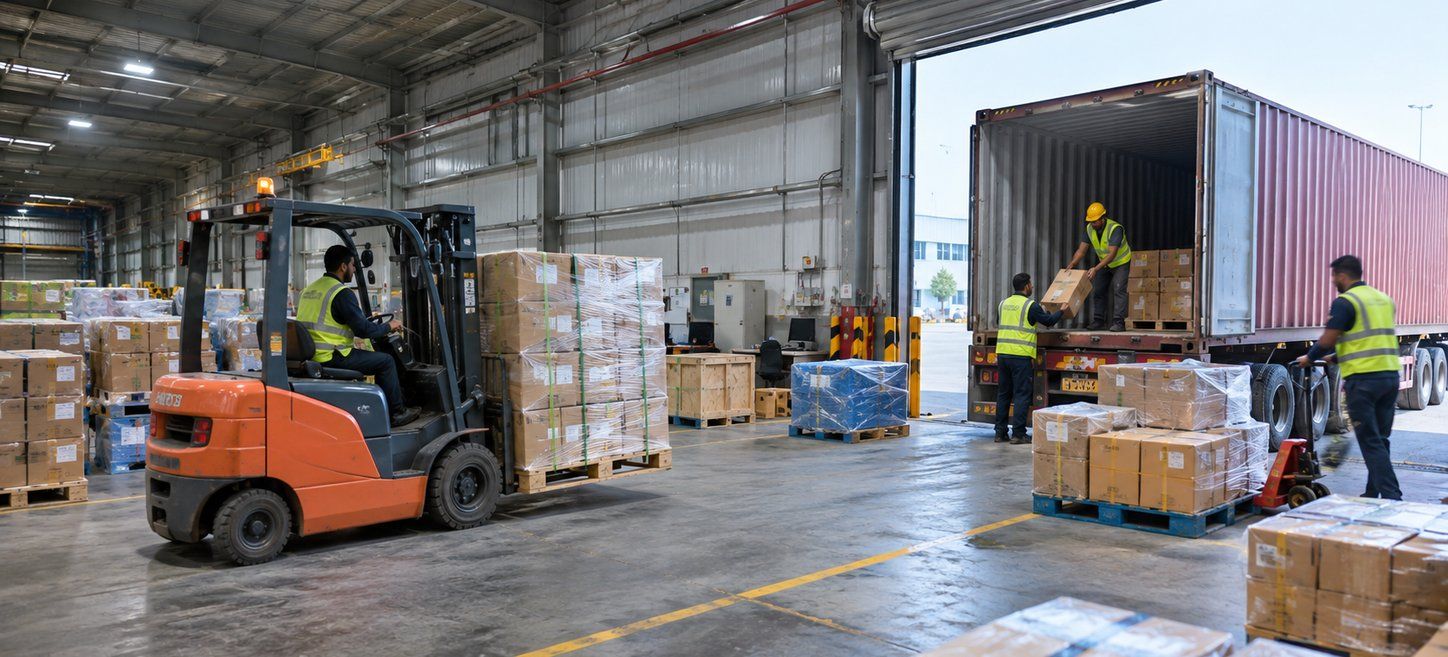
- Food and beverage cargo: many EQM products are temperature sensitive. Plan reefer or controlled storage, and allow for municipality inspection time on arrival.
- Packaging: if you use the EQM logo, print it as the licence allows. A wrongly used logo can cause problems during inspection.
Keeping the mark valid
EQM isn’t a one-time stamp. Surveillance audits check that the factory keeps meeting the standard, and a failed audit can lead to suspension. For importers, that means:
- Ask the manufacturer to tell you about audit dates and results.
- Check the licence status before each order, not only before the first.
- Keep packaging in line with the licence. A redesign may need approval before it ships.
- Plan renewals early, so a gap doesn’t hold a container at the port.
How ARK helps
- We ship and clear the goods; we don’t apply for the mark. Tell us your products when you request a quote, and we will flag items that need approvals before booking.
- For drinks and dairy, we can plan sea freight with the right container and time arrival with your approvals.
- Warehousing in Dubai lets you hold stock while paperwork or inspections are completed.
Official source
- Ministry of Industry and Advanced Technology (MoIAT): moiat.gov.ae, for the current EQM product list, requirements and approved certification bodies
Mandatory lists and validity rules change. Confirm the current EQM requirements with MoIAT before you plan production or shipments.