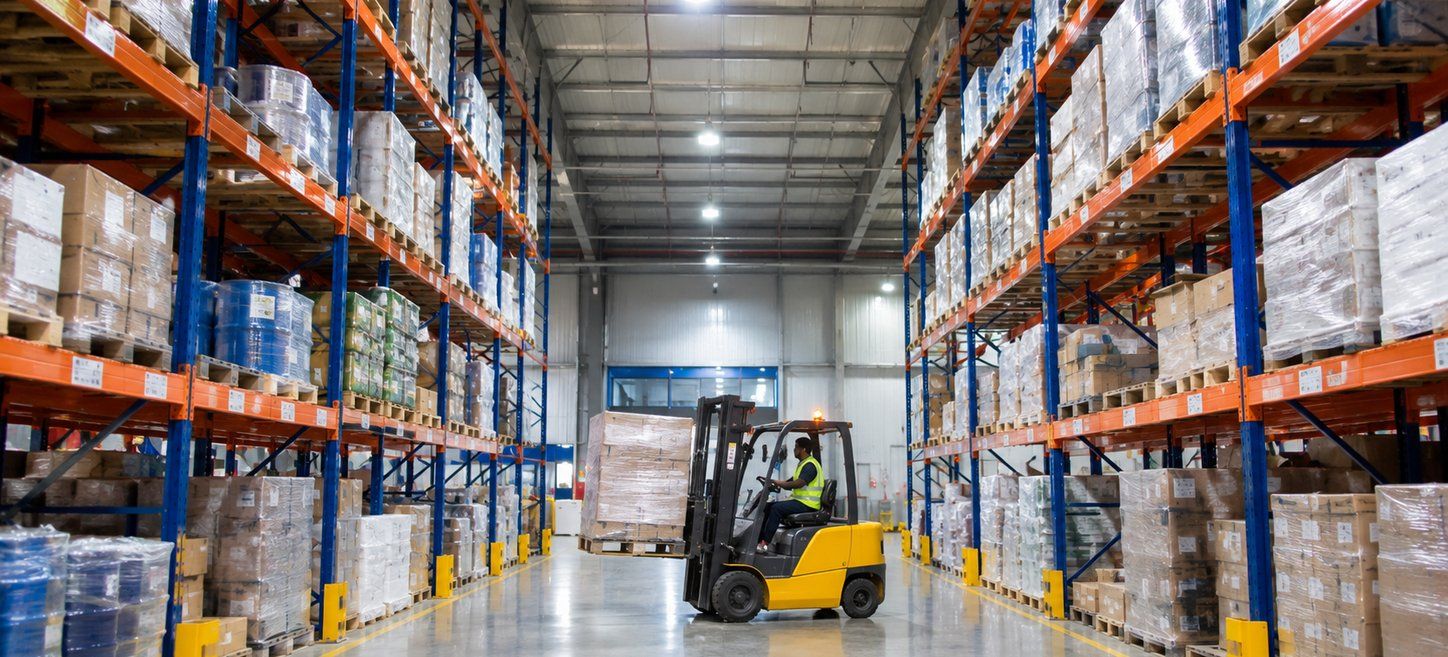
Short answer: Dubai offers three main types of warehousing. Free zone warehouses hold goods outside the UAE customs territory, so no duty is paid while they stay there, which suits re-exports. Mainland warehouses hold goods that are already cleared, with duty and VAT paid, which suits selling in the UAE. Bonded warehouses hold goods under customs control until they are released or re-exported. The right choice depends on where your customers are, how long goods stay and what licence you hold.
Why warehousing location matters in Dubai
Where your goods are stored decides when customs duty and VAT are paid, how quickly goods can leave the country, and which customers you can serve directly. Choosing the wrong type can mean paying duty on goods you later re-export, or losing time moving stock between zones.
The three types compared
| Free zone warehouse | Mainland warehouse | Bonded warehouse | |
|---|---|---|---|
| Customs status | Outside UAE customs territory for duty purposes | Cleared into the UAE | Under customs control |
| Duty and VAT | Not paid while goods stay | Paid on import | Not paid until released |
| Best for | Re-exports and regional distribution | Selling in the UAE | Goods awaiting a decision, or transit |
| Selling to UAE customers | Goods must be declared into the mainland first | Direct | Goods must be cleared first |
| Re-exporting | Simple exit declaration | Possible; duty refund has conditions | Exit under customs control |
| Licence | Usually a free zone licence or a free zone logistics provider | Mainland trade licence | Operated by a licensed warehouse |
Free zone warehousing
A free zone is a designated area with its own rules for duty, ownership and licensing. Dubai’s free zones include those around Jebel Ali and Dubai’s airports. Goods imported into a free zone do not pay the 5% UAE customs duty while they stay there.
Advantages
- No duty on goods that are re-exported.
- Close to the port or airport, so goods move quickly.
- Suits holding stock for several regional markets.
Things to consider
- Selling into the UAE mainland requires a customs declaration, with duty and VAT paid at that point.
- Free zone licences and facilities have their own costs and rules.
See re-export from Dubai for how free zone stock is shipped onward.
Mainland warehousing
A mainland warehouse stores goods that have been cleared through customs. Duty and VAT have already been paid, so the goods can be sold and delivered anywhere in the UAE without further customs steps.
Advantages
- Goods are ready to sell and deliver in the UAE.
- Simple for retailers, distributors and e-commerce sellers serving local customers.
- Many locations close to customers in Dubai and the other emirates.
Things to consider
- Duty is paid upfront, even on stock that might later be re-exported.
- Duty refunds on re-exports have conditions and time limits.
Bonded warehousing
A bonded warehouse is a customs-supervised facility where imported goods can be stored without paying duty. Duty is paid only when the goods are released into the local market; goods that are re-exported leave without UAE duty.
Advantages
- Delays duty payment, which helps cash flow.
- Useful when the final destination is not yet decided.
- Suits goods in transit that need storage or handling before the next leg.
Things to consider
- Goods are under customs control, so every movement needs paperwork.
- Not every product can be stored in bond, and storage time can be limited.
Which one should you choose?
| If you… | Consider |
|---|---|
| Sell mostly to buyers outside the UAE | Free zone or bonded |
| Sell mostly within the UAE | Mainland |
| Sell both locally and abroad | Free zone with mainland releases, or split stock |
| Don’t yet know where goods will go | Bonded |
| Need short storage between sea and road legs | Bonded or free zone near the port |
| Need fast local delivery to stores or customers | Mainland near your customers |
What warehousing costs in Dubai
Warehouse pricing usually has several parts:
- Storage, per pallet or per square metre, charged daily, weekly or monthly.
- Handling in and out, per pallet, carton or container for receiving and dispatching goods.
- Container unloading (destuffing) and loading (stuffing), per container.
- Value-added services, such as labelling, kitting, picking, packing and returns.
- Inventory management and reporting.
- Insurance for stored goods, if not covered by your own policy.
Ask for a quote based on your actual volumes: the number of pallets, how often goods move in and out, and the order profile. A warehouse that is cheap per pallet can be expensive if handling charges are high and your stock moves often.
Choosing a warehouse: a checklist
- Location: close to the port, airport or your customers, depending on your flows.
- Customs status: free zone, mainland or bonded, to match where goods are going.
- Storage conditions: racking, floor space, and temperature control for sensitive goods. See protecting cargo from heat.
- Security: CCTV, access control and fire protection.
- Systems: stock reports you can access, and accurate inventory records.
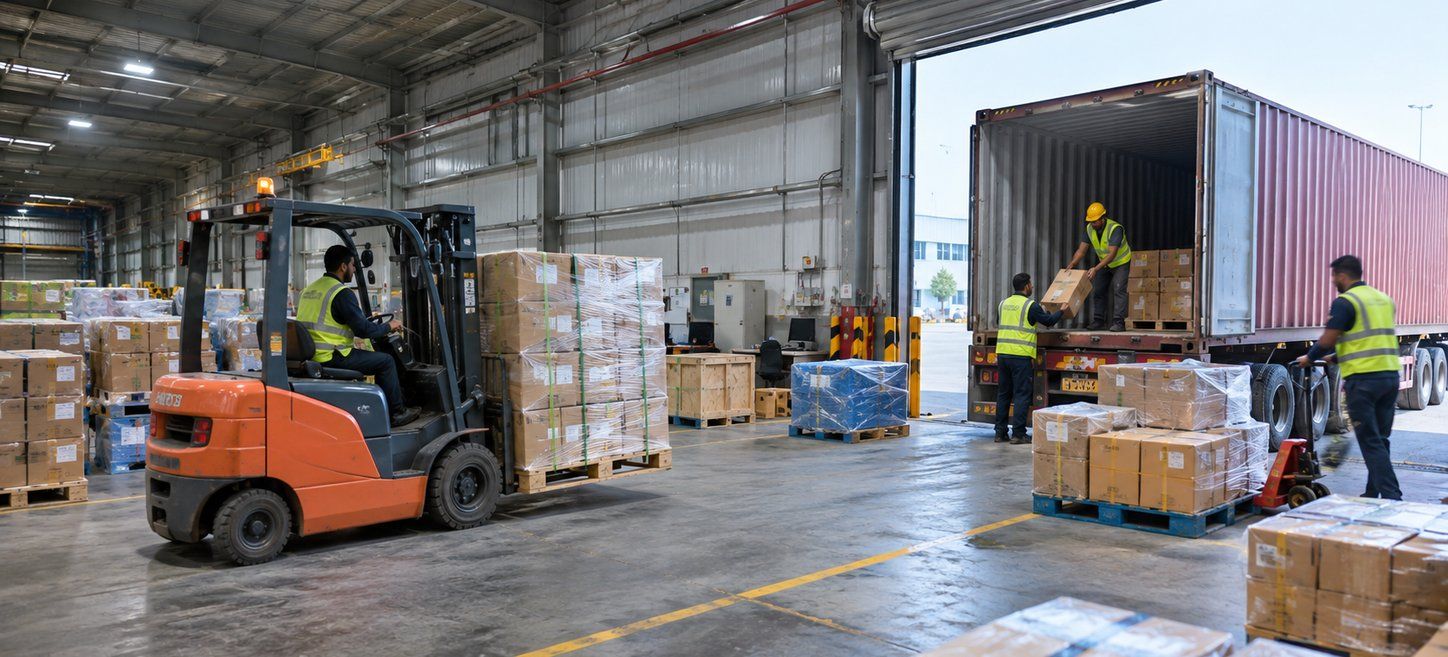
- Handling capacity: forklifts, loading docks and staff for your volumes.
- Transport links: trucking for local delivery and to the port or border.
- Insurance: who is liable for loss or damage, and up to what value.
- Contract terms: minimum periods, notice and how charges change.
How warehousing fits into the supply chain
For many importers, the best set-up combines several services: sea freight into Jebel Ali, customs clearance, warehousing and delivery across the UAE and GCC. When one provider handles these steps, goods move from the port to storage and out to customers without hand-offs between companies.
Container goods can also be unloaded into a warehouse and the empty container returned promptly, stopping detention charges. See cross-stuffing and transhipment.
Warehousing for e-commerce sellers
Online sellers need more than storage. A good e-commerce warehouse in Dubai offers pick and pack for individual orders, returns handling, stock visibility that matches your online store, and links with last-mile couriers. Stock sold to UAE customers needs to be cleared into the mainland, while orders for other GCC countries can sometimes ship from a free zone. Choose the set-up based on where most of your orders go.
Moving stock between a free zone and the mainland
Moving goods from a free zone warehouse to a customer in the UAE mainland is a customs movement, not just a truck journey.
- Raise the sale and the commercial invoice for the mainland buyer.
- File the import declaration from the free zone into the mainland.
- Pay customs duty and VAT on the goods released, unless an exemption applies.
- Release the goods from the free zone warehouse.
- Deliver to the buyer with the delivery note and invoice.
Doing this correctly keeps duty and VAT records clean and avoids penalties for goods leaving a free zone undeclared.
Short-term storage between legs
Not every shipment needs long-term warehousing. Short-term storage is common between a sea arrival and an onward road leg, while waiting for a buyer’s payment, or while a permit is processed. Short stays near Jebel Ali keep haulage costs low and let you return the shipping line’s container quickly.
Key takeaways
- Free zone warehouses hold goods without UAE duty while they stay in the free zone.
- Mainland warehouses hold goods that are already cleared, ready to sell in the UAE.
- Bonded warehouses keep goods under customs control until they are released or re-exported.
- Choose based on where customers are, how long goods stay and which licence you hold.
- Warehouse costs include storage, handling, container unloading and value-added services.
- Moving goods from a free zone to the mainland requires a declaration and payment of duty and VAT.
Get a warehousing quote
Tell us what you store, how many pallets, how long it stays and where it goes next. Our team can arrange storage in Dubai together with customs clearance and delivery across the UAE and GCC. See our warehousing and distribution service or request a quote.