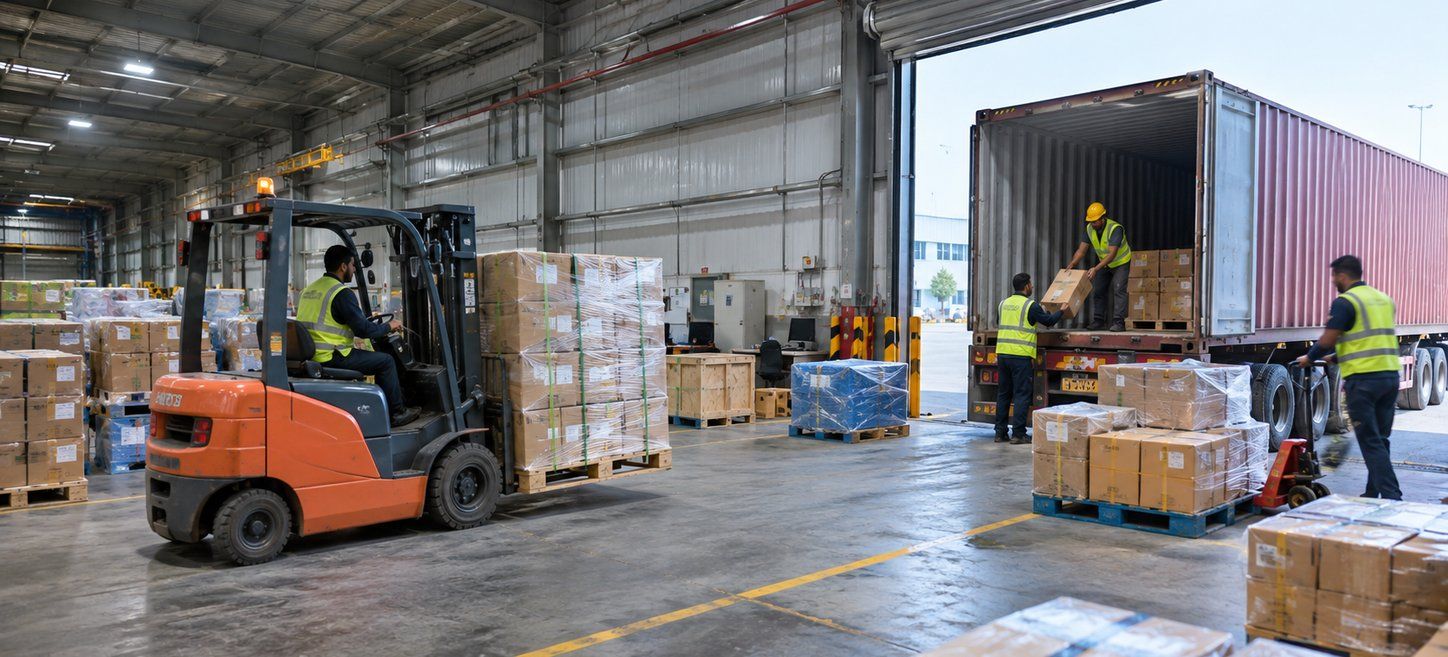
Short answer: a sea freight quote is a base ocean freight rate plus surcharges. The most common are BAF (fuel), LSS (low-sulphur fuel), PSS (peak season), GRI (general rate increase), THC (terminal handling at origin and destination), ISPS (port security), war risk surcharges, CAF (currency), and documentation fees. On routes to Europe, an EU ETS surcharge may also apply. To compare quotes fairly, ask for all-in pricing and a clear list of what is included and excluded.
Why shipping lines use surcharges
Shipping costs change all the time. Fuel prices move, currencies shift, demand rises before holidays, and new regulations add costs. Rather than changing the base freight rate every time, shipping lines add surcharges that can be adjusted on their own. That makes quotes more complex, but it also explains why the same route can cost different amounts in different months.
The main surcharges, explained
| Surcharge | Stands for | What it covers | How it is charged |
|---|---|---|---|
| BAF | Bunker adjustment factor | Changes in fuel cost | Per container; reviewed monthly or quarterly |
| LSS | Low sulphur surcharge | Cost of compliant low-sulphur fuel | Per container |
| EBS | Emergency bunker surcharge | Sudden fuel price jumps | Per container, when applied |
| CAF | Currency adjustment factor | Exchange rate changes | Percentage of freight |
| PSS | Peak season surcharge | High seasonal demand | Per container, for a set period |
| GRI | General rate increase | Across-the-board rate rises | Per container, from a set date |
| THC | Terminal handling charge | Handling at the terminal | Per container (origin and destination) |
| ISPS | International Ship and Port Facility Security | Port security costs | Per container |
| WRS | War risk surcharge | Higher insurance and risk on certain routes | Per container, when applied |
| EU ETS | EU Emissions Trading System surcharge | Carbon costs on voyages to and from the EU | Per container, on EU routes |
| DOC / BL fee | Documentation / bill of lading fee | Issuing the bill of lading | Per bill of lading |
Fuel surcharges: BAF, LSS and EBS
BAF (bunker adjustment factor) passes changes in ship fuel prices on to shippers. When fuel gets more expensive, BAF rises, and it falls when fuel gets cheaper. It is usually reviewed monthly or quarterly.
LSS (low sulphur surcharge) covers the extra cost of low-sulphur fuel. Since 1 January 2020, the International Maritime Organization has limited the sulphur content of ship fuel to 0.50% worldwide, and compliant fuel costs more. Some lines include LSS within BAF.
EBS (emergency bunker surcharge) is added when fuel prices jump suddenly between normal BAF reviews.
Demand surcharges: PSS and GRI
PSS (peak season surcharge) is added when demand for space is high, for example before Chinese New Year or during the year-end retail peak. It is announced in advance and applies for a set period. See peak season shipping.
GRI (general rate increase) is a rise in base rates across a trade, applied from a set date. Lines often announce GRIs, but how much of the increase sticks depends on demand.
Terminal and port charges: THC and ISPS
THC (terminal handling charge) pays for handling the container at the terminal: lifting it on and off the vessel and moving it around the yard. There is an origin THC (OTHC) where the cargo loads and a destination THC (DTHC) where it arrives. Who pays each one depends on the Incoterm.
ISPS charges cover port security under the International Ship and Port Facility Security Code, which has applied to ports and ships since 2004.
Risk and regulatory surcharges
War risk surcharges are added when a route passes through areas with higher security risk, which raises insurance costs for shipowners. Lines add or remove them as conditions change, so they can appear on Red Sea or Gulf routes with little notice.
EU ETS surcharges cover carbon costs on voyages to and from the European Union, which has included shipping in its Emissions Trading System since 2024. They apply to cargo moving between Dubai and EU ports.
Canal surcharges may apply to services routed through the Suez Canal.
Origin and destination fees that are not surcharges
Quotes also include fees that are not strictly surcharges but still add to the total:
- Documentation and bill of lading fees.
- Seal fees for the container seal.
- VGM fees for submitting the verified gross mass.
- Delivery order fees at destination.
- CFS charges for LCL cargo at both ends.
- Customs clearance at origin and destination.
See container shipping cost from Dubai for how these build up into a total.
Who pays which charge? Incoterms decide
| Charge | FOB (buyer books freight) | CFR / CIF (seller books freight) |
|---|---|---|
| Origin THC and export fees | Seller | Seller |
| Ocean freight and surcharges | Buyer | Seller |
| Destination THC and fees | Buyer | Buyer |
| Import clearance and duty | Buyer | Buyer |
Under CFR and CIF, the buyer still pays destination charges, which the seller’s freight quote may not show. Read Incoterms 2020 explained.
Base rate vs all-in rate
A base rate is the ocean freight only. An all-in rate includes the main ocean surcharges such as BAF and LSS, but often not origin and destination charges. When a forwarder says “all-in”, ask exactly which charges are included.
How to compare two quotes (illustrative)
This example is illustrative only. Two forwarders quote a 40′ container from Jebel Ali to the same port.
| Quote A | Quote B | |
|---|---|---|
| Base ocean freight | Lower | Higher |
| BAF and LSS | Extra, “as per tariff” | Included |
| PSS | Extra if applied | Included until expiry date |
| Origin THC | Included | Included |
| Destination charges | Not shown | Estimated and listed |
| Validity | 7 days | 14 days |
Quote A looks cheaper, but its surcharges are open-ended and its destination charges are missing. Quote B costs more upfront but is far more predictable. Ask the first forwarder to give a firm total before you decide.
Questions to ask about any freight quote
- Is this rate all-in, and which surcharges are included?
- Are BAF, LSS or PSS fixed for the validity period, or charged at the rate on the sailing date?
- Which origin and destination charges are included?
- How long is the quote valid, and what happens if the vessel sails after that?
- Are there war risk, canal or ETS surcharges on this route?
- How many free days are included at destination?
How surcharges work for LCL shipments
For LCL cargo, surcharges are usually built into a rate per cubic metre or revenue ton rather than charged per container. The consolidator buys the full container, pays the carrier’s surcharges and spreads them across the shippers sharing the box. LCL quotes also include CFS charges at origin and destination for loading and unpacking the container. See LCL shipping from Dubai.
Why the invoice can differ from the quote
A final freight invoice can be higher than the original quote for several reasons:
- Surcharges charged “as per tariff” changed between the quote and the sailing date.
- The quote expired before the cargo was booked or sailed.
- The cargo changed: more weight, more volume or a different container type.
- New surcharges were introduced on the route, such as war risk or congestion charges.
- Destination charges that were not shown on the quote.
Ask for fixed surcharges where possible, book within validity, and confirm cargo details before booking to avoid surprises.
Key takeaways
- A sea freight price is a base rate plus surcharges such as BAF, LSS, PSS, GRI and THC.
- BAF and LSS track fuel costs; the IMO has capped fuel sulphur at 0.50% since 1 January 2020.
- PSS and GRI reflect demand and are usually announced before they apply.
- THC is charged at both origin and destination; the Incoterm decides who pays each.
- War risk, canal and EU ETS surcharges apply on some routes.
- Always ask which charges an “all-in” rate includes, and whether surcharges are fixed for the quote validity.
How an NVOCC can help with surcharges
An NVOCC buys space from several shipping lines and can compare their surcharges as well as their base rates. It can also give you one quote that combines the ocean freight with origin and destination services. See what is an NVOCC.
Our team quotes sea freight from Jebel Ali with each charge listed, so you can see exactly what you pay for. Request a quote or see our sea freight service.