Short answer: medical devices sold in the UAE need product registration with the federal regulator, and each shipment generally needs an import permit. They are two separate approvals. Federal regulation of medical products has been moving from the Ministry of Health and Prevention (MOHAP, often called “MoH”) to the Emirates Drug Establishment (EDE), set up under Federal Decree-Law No. 38 of 2024. Check which body handles your product before you apply, and get both approvals before the goods ship.
ARK Shipping doesn’t register medical products. We ship and clear them. This guide explains what has to be in place first.
MoH, MOHAP or EDE?
Many people still search for “MoH registration”. In practice:
- MOHAP handled medical device and pharmaceutical registration and import permits at federal level.
- The Emirates Drug Establishment (EDE) was created to regulate medical products, and services have been transferring to it in stages.
- During the transfer, some services moved before others. MOHAP’s own site has asked customers to keep using its channels for categories not yet moved.
Check both ede.gov.ae and mohap.gov.ae for your product type before applying. Health authorities in individual emirates also regulate the facilities and professionals that use the devices.
Registration vs import permit
| Product registration | Import permit | |
|---|---|---|
| What it approves | The device for the UAE market | A specific consignment |
| Who applies | The marketing authorisation holder (a licensed UAE company) | The licensed importer |
| How often | Once per device, then renewal | Per shipment or as the rules require |
| Typical validity | Commonly reported as five years | Linked to the consignment |
Having registration doesn’t clear the goods on its own. Importers are often caught out when a registered device arrives without a valid import permit.
What registration usually involves
Requirements depend on the device’s risk class. Applicants are commonly asked for:
- Establishment registration of the UAE company that will hold the authorisation.
- Technical documentation, such as device description, intended use, labels and instructions.
- Evidence of approval elsewhere, such as CE marking or US FDA clearance, which often supports the application.
- Quality system certificates for the manufacturer, such as ISO 13485.
- A free sale certificate from the country of origin.
Electrical medical equipment may also have to meet UAE conformity and hazardous-substance rules; see UAE RoHS. Devices with wireless connections may need TDRA type approval.
What about supplements and health products?
Health and food supplements can fall under different rules depending on the claims made and the ingredients. Some are treated as health products and others as food. Cosmetics making medical claims can also be reclassified. Confirm the classification before you register, because it decides which authority you deal with. For cosmetics, see our Montaji guide.
Why the device class matters
Medical devices are classed by risk, from low-risk items such as bandages and examination gloves to high-risk devices such as implants and life-support equipment. The class affects:
- How much documentation the regulator expects, including clinical evidence for higher-risk devices.
- How long the review takes.
- Whether approvals from other regulators, such as the EU or the US, can be used to support or speed up the application.
Confirm the class with your manufacturer, and check how the UAE regulator classes the device. It doesn’t always match other markets.
Cold-chain shipping plan
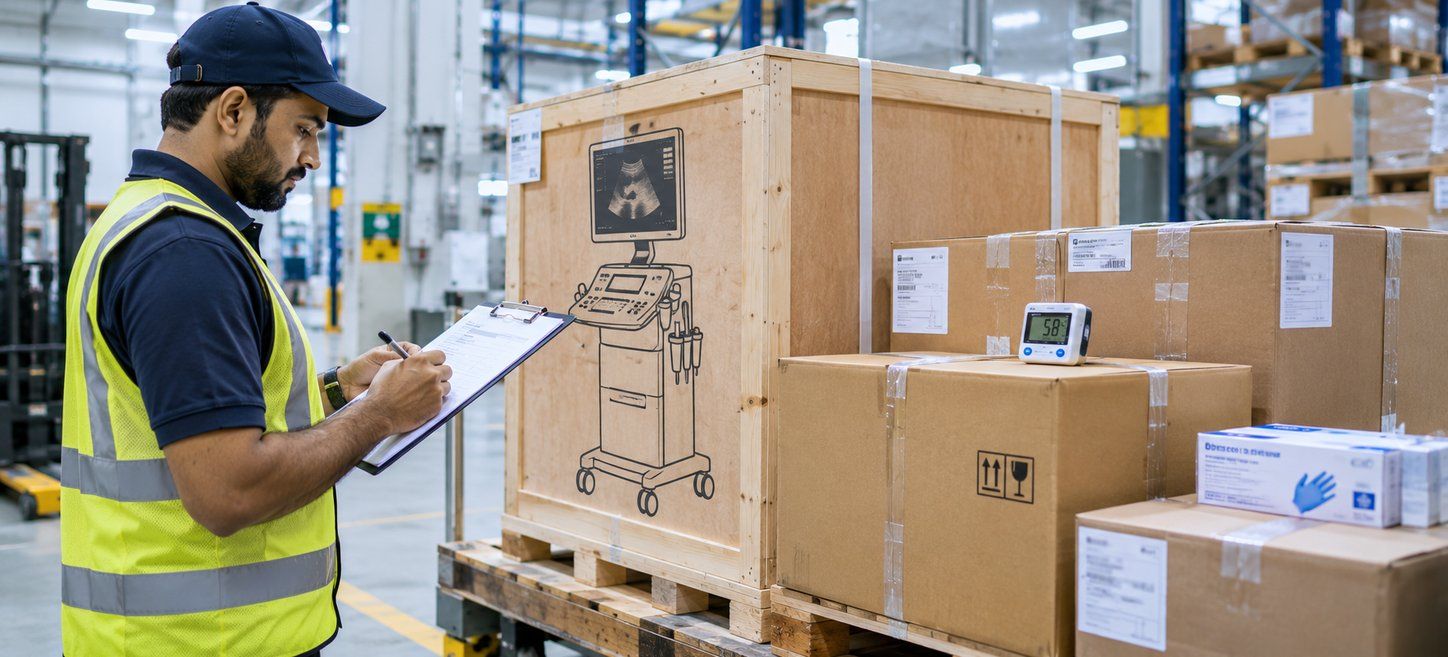
For reagents, test kits and other temperature-sensitive products, agree these points before booking:
- Temperature range for the product, such as 2–8°C or frozen, from the manufacturer’s instructions.
- Packaging, such as validated insulated shippers for air freight, or a reefer container for larger volumes.
- Temperature loggers in the shipment, with the data shared on arrival.
- Routing with as few transfers as possible, and cold storage at transit points if needed.
- Cold storage on arrival, ready before the shipment lands.
- Documents with the shipment, so clearance is not delayed while the goods warm up.
Example: patient monitors for a clinic group
This example is illustrative only. A UAE distributor plans to supply patient monitors made in Germany to a group of private clinics.
- The distributor, a licensed UAE company, becomes the marketing authorisation holder and completes establishment registration.
- It submits the device file, including the manufacturer’s quality certificates and EU approval, and receives product registration.
- For the first order, it applies for an import permit listing the models and quantities.
- The monitors are crated, insured and flown from Frankfurt to Dubai. The monitors have wireless connectivity, so the distributor also confirms TDRA approval.
- The consignment clears with the registration, permit and invoice all matching, and is delivered to the clinics.
Shipping medical equipment
- Temperature control: reagents, some consumables and many pharmaceuticals need cold-chain handling throughout.
- Fragile, high-value equipment: good crating, insurance at full value, and careful handling at transhipment points.
- Speed: urgent or temperature-sensitive items usually move by air freight. Larger equipment and bulk consumables can go by sea.
- Matching documents: model numbers and quantities on the invoice must match the registration and the permit.
Documents that should match on every shipment
Medical consignments are checked more closely than general cargo. Before booking, confirm these all show the same device names, model numbers and quantities:
- Product registration certificate
- Import permit for the consignment
- Commercial invoice and packing list
- Labels and instructions for use on the products
- Certificate of origin, and any temperature or sterilisation records
A mismatch in one document can hold the whole shipment, so check them together, not one by one.
How ARK helps
- Share your device list with your quote request. We will check the shipping documents and handling it needs.
- We arrange air or sea freight to Dubai, including temperature-controlled options.
- Our customs clearance team clears the shipment once your registration and import permit are in place, and warehousing is available if you need to hold stock.
Official sources
- Emirates Drug Establishment: ede.gov.ae
- Ministry of Health and Prevention: mohap.gov.ae
Responsibilities between authorities are still changing. Confirm the current process for your product before you ship.