Short answer: a master bill of lading (MBL) is issued by the shipping line to the NVOCC or forwarder that booked the container space. A house bill of lading (HBL) is issued by the NVOCC or forwarder to the actual shipper. If you ship with an NVOCC such as ARK, you receive the HBL, and the cargo is released at destination against it.
The two documents side by side
| Master bill of lading (MBL) | House bill of lading (HBL) | |
|---|---|---|
| Issued by | The shipping line (ocean carrier) | The NVOCC or freight forwarder |
| Issued to | The NVOCC / forwarder | The actual shipper (exporter) |
| Shipper shown | The NVOCC or forwarder | The exporter |
| Consignee shown | The NVOCC’s agent at destination | The buyer, a bank (for letters of credit), or “to order” |
| Used to release cargo from | The shipping line | The NVOCC’s destination agent |
| Who usually holds it | NVOCC and its agent | Shipper, then buyer or bank |
Why there are two bills of lading
An NVOCC (non-vessel operating common carrier) buys space from shipping lines and resells it to shippers under its own transport contract. Two contracts exist:
- Shipping line ↔ NVOCC, documented by the MBL.
- NVOCC ↔ shipper, documented by the HBL.
This is what lets an NVOCC consolidate several shippers’ LCL cargo into one container: the shipping line issues one MBL for the container, and the NVOCC issues a separate HBL to each shipper inside it. Read what an NVOCC is for the full picture.
How release works at destination
- The vessel arrives and the shipping line releases the container to the NVOCC’s agent against the MBL.
- Your consignee presents the HBL — or the HBL is telex released — to that agent.
- The agent issues a delivery order, and the consignee clears customs and collects the cargo.
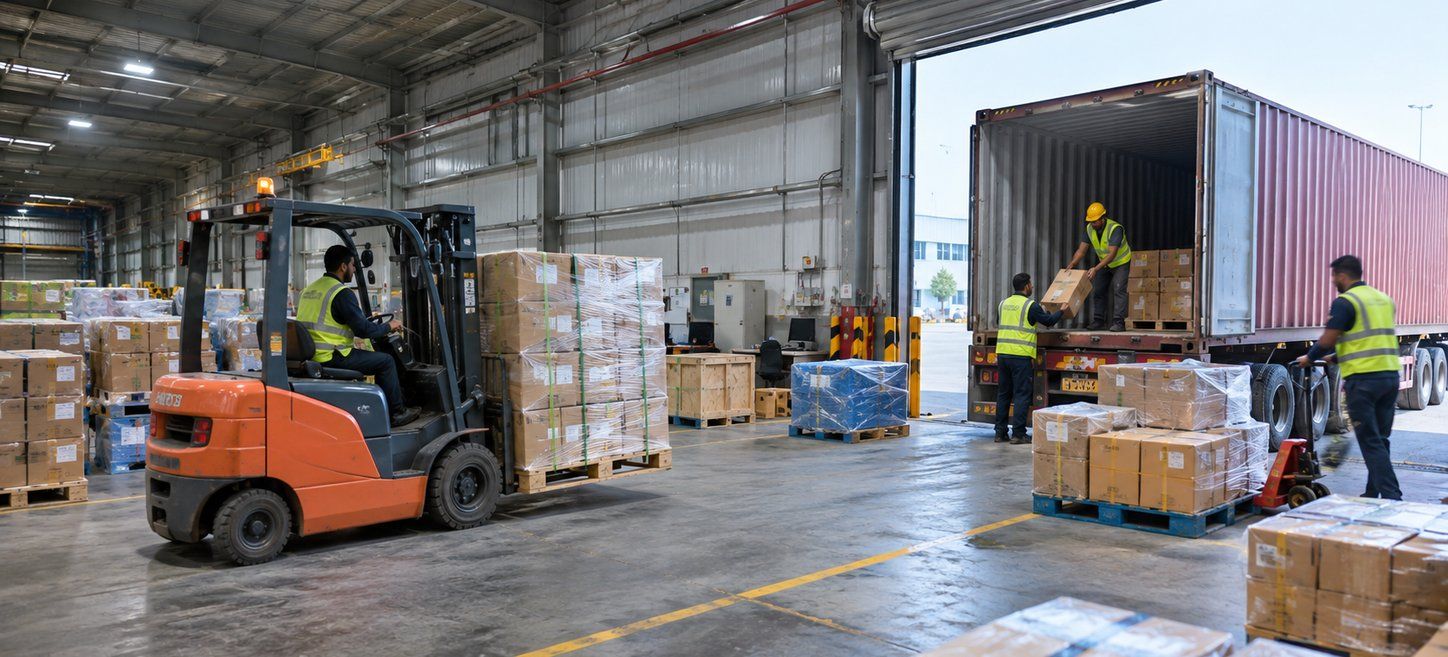
For LCL, the container goes to a container freight station, where it is unpacked and each consignee collects their own goods against their HBL.
Original, telex release or seaway bill?
- Original (negotiable) B/L: usually a set of three originals. One must be surrendered to release the cargo. Common when payment is by letter of credit, because the bank holds the originals until the buyer pays.
- Telex release: originals are surrendered at origin and the destination office is told to release the cargo without paper. Fast and common between trusted parties.
- Seaway bill: a non-negotiable transport document. The named consignee can collect the cargo without presenting an original.
Choose the release type before the B/L is issued — changing it later costs time.
When the HBL matters most
- Letters of credit: the bank checks the HBL against the LC. Shipper, consignee, notify party, ports and goods description must match exactly.
- Confidentiality: traders re-exporting through Dubai sometimes need a switch B/L, issued in place of the original set, so the end buyer does not see the original supplier. This must follow the trade rules and be agreed in advance.
- Claims: if cargo is lost or damaged, the shipper’s claim is under the HBL against the NVOCC, which in turn deals with the shipping line under the MBL.
Worked example: one ARK shipment, two bills of lading
Take a typical ARK FCL shipment: one 40ft container of tiles from a Dubai trading company to a buyer in Mumbai, loaded at Jebel Ali for Nhava Sheva. This is how the two documents read:
| Master B/L (issued by the carrier) | House B/L (issued by ARK) | |
|---|---|---|
| Shipper | A R K Shipping Services Lines L.L.C, Dubai | The Dubai trading company |
| Consignee | ARK’s office in India | The Mumbai buyer, or “to order” of their bank |
| Notify party | ARK’s office in India | The buyer or their customs broker |
| Goods | 1 x 40ft, “said to contain” tiles | Full description, packages and weights from the invoice |
| Freight | As agreed between ARK and the carrier | As agreed with the trader (prepaid or collect) |
How release works in this example. The buyer pays on open account, so the trader asks for a telex release instead of couriering originals. Once the trader confirms payment, we surrender the house B/L in Dubai and tell our office in India to release. When the vessel arrives, our office collects the container from the carrier against the master B/L and issues the delivery order to the buyer’s broker. No paper has to travel, and the container can clear inside its free days.
If the sale were under a letter of credit, we would issue three original house B/Ls, the trader would present them to the bank, and the buyer’s bank would release one original to the buyer to collect the cargo.
Common mistakes we see at Jebel Ali
- Consignee details that do not match the LC. A spelling difference, a missing branch name or an old address is enough for the bank to reject the documents. Copy the consignee exactly as it appears in the credit.
- Asking for originals, then sending them by courier too late. On short lanes such as Dubai to India the vessel can arrive before the courier does. If you do not need originals for a bank, choose a telex release or seaway bill at booking.
- Requesting a telex release before you have been paid. Once the house B/L is surrendered, the buyer can collect the cargo. Release only when payment is in your account.
- A goods description that differs from the invoice. Customs at destination compares the B/L, invoice and packing list. Different wording, package counts or HS codes lead to queries and delays.
Checklist before your HBL is issued
- Shipper, consignee and notify party names and addresses are complete and correct
- Goods description, HS code, packages and weights match the invoice and packing list
- Port of loading and port of discharge are correct
- Freight terms (prepaid or collect) match the Incoterm
- Release type is agreed (original, telex or seaway bill)
- For an LC, the wording matches the credit exactly
At ARK we issue our own house bills of lading as an NVOCC in Dubai, for both FCL and LCL sea freight. Send us your draft details and we will check them before the B/L is issued.